
Concrete Curing Methods: Best Practices for Strength, Durability, and Long-Term Performance
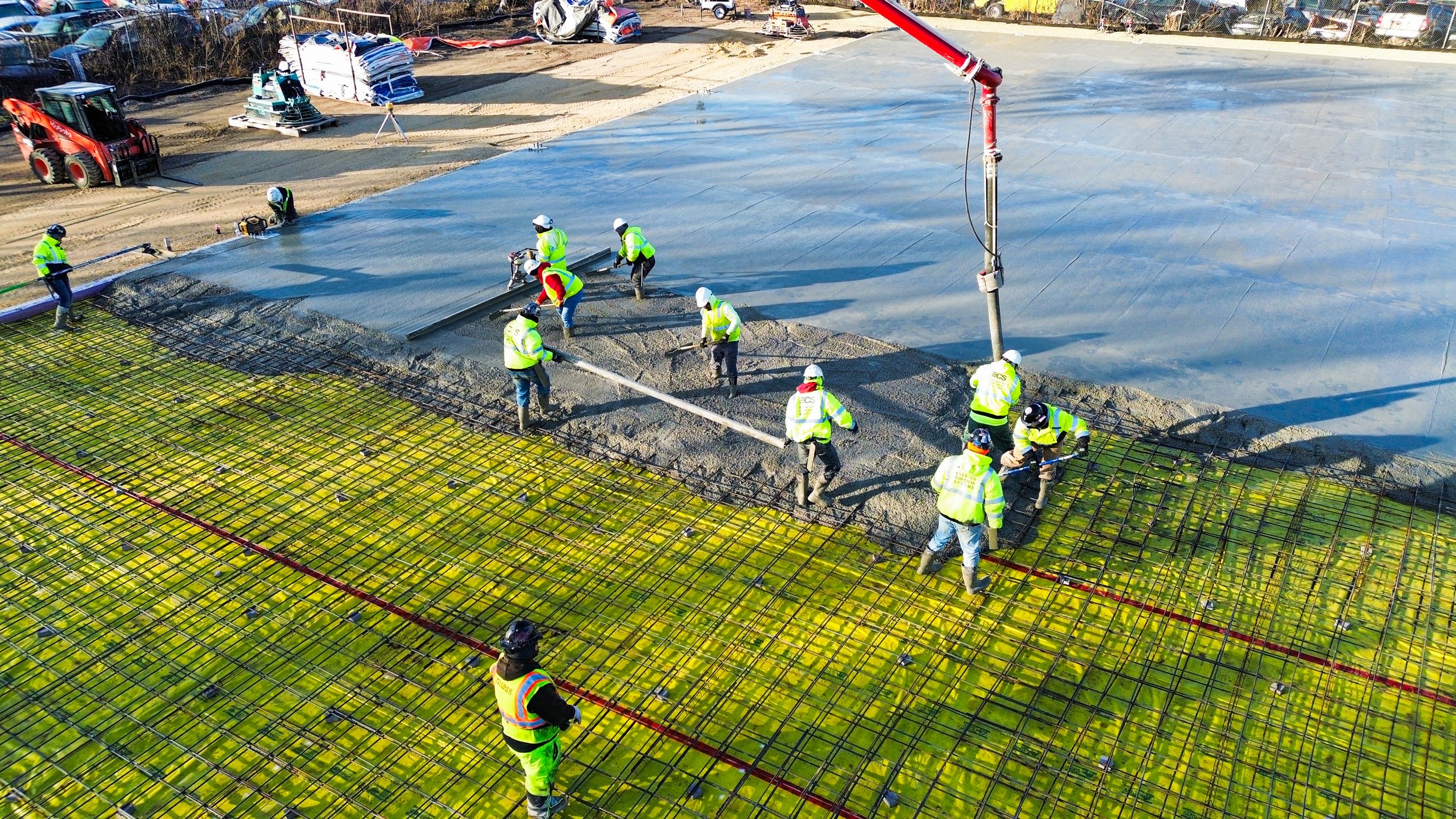
Concrete curing is one of the most critical—and often misunderstood—steps in the concrete construction process. While placing and finishing concrete gets much of the attention, how concrete is cured directly impacts its strength, durability, crack resistance, and long-term performance.
In this guide, we’ll break down what concrete curing is, why it matters, and explore the most effective concrete curing methods used in residential, commercial, and industrial construction. Whether you’re pouring a slab, sidewalk, warehouse floor, or structural element, understanding proper curing techniques can mean the difference between concrete that lasts decades and concrete that fails prematurely.
What Is Concrete Curing?
Why Proper Concrete Curing Matters
Key Factors That Affect Concrete Curing
Common Concrete Curing Methods
Final Thoughts: Curing Is the Foundation of Strong Concrete
What Is Concrete Curing?
Concrete curing is the process of maintaining adequate moisture and temperature conditions in freshly placed concrete to allow cement hydration to continue. Hydration is the chemical reaction between cement and water that gives concrete its strength.
If concrete dries out too quickly or experiences extreme temperature changes during early curing, hydration slows or stops—resulting in weaker, more brittle concrete with a higher risk of cracking and surface defects.
Proper curing ensures:
Higher compressive strength
Improved abrasion resistance
Reduced shrinkage cracking
Better freeze-thaw durability
Longer service life

Why Proper Concrete Curing Matters
Many concrete problems can be traced back to inadequate curing. Without proper moisture retention and temperature control, concrete may appear fine on the surface but suffer from internal weaknesses.
Benefits of Proper Curing
Increases ultimate concrete strength
Reduces permeability and water intrusion
Improves resistance to chemicals and deicing salts
Enhances surface hardness and wear resistance
Minimizes dusting and scaling
In short, curing is not optional—it’s a structural necessity.
Key Factors That Affect Concrete Curing
Before choosing a curing method, it’s important to understand the factors that influence curing performance:
1. Temperature
Concrete cures best between 50°F and 80°F. Cold temperatures slow hydration, while excessive heat can cause rapid moisture loss.
2. Moisture Availability
Concrete must retain sufficient moisture for hydration to continue. Drying too quickly leads to incomplete curing.
3. Time
Concrete continues to cure for weeks and even months. Most industry standards reference a 28-day curing period for achieving design strength.
4. Mix Design
Water-cement ratio, cement type, supplementary cementitious materials (SCMs), and admixtures all affect curing behavior.
Common Concrete Curing Methods
EThere is no one-size-fits-all approach to curing concrete. The best method depends on project size, environment, budget, and performance requirements. Below are the most widely used and effective curing methods.
1. Water Curing (Moist Curing)
Water curing is one of the oldest and most effective curing methods. It involves continuously supplying moisture to the concrete surface to prevent evaporation.
Common Water Curing Techniques
Ponding or flooding
Sprinkling or fogging
Wet burlap or fabric coverings
Advantages
Maximizes concrete strength
Excellent for slabs and flatwork
Reduces surface cracking
Improves abrasion resistance
Limitations
Labor-intensive
Requires constant monitoring
Not always practical for vertical surfaces
Best for: Slabs, pavements, sidewalks, and large flat areas where moisture can be maintained consistently.
2. Curing Compounds (Membrane-Forming Curing)
Curing compounds are liquid chemical sprays applied to the surface of fresh concrete. Once dried, they form a thin membrane that seals in moisture.
Types of Curing Compounds
Resin-based
Wax-based
Acrylic-based
Dissipating compounds (for future coatings)
Advantages
Easy to apply
Cost-effective
Minimal labor
Suitable for large commercial projects
Limitations
Must be applied evenly
Some compounds interfere with coatings or floor finishes
Less effective in extreme heat or wind
Best for: Commercial slabs, warehouses, pavements, and projects where water curing is impractical.
3. Plastic Sheeting (Sealed Curing)
Plastic curing involves covering concrete with polyethylene sheets to trap moisture and reduce evaporation.
Advantages
Inexpensive
Effective moisture retention
Good for irregular shapes
Limitations
Can discolor concrete
Risk of surface marks if plastic contacts the slab
Requires careful placement
Best for: Residential slabs, sidewalks, and smaller pours.
4. Insulated Curing Blankets
Curing blankets combine moisture retention with temperature control, making them especially valuable in cold or variable weather.
Advantages
Protects against freezing
Maintains consistent curing temperature
Reduces thermal cracking
Reusable
Limitations
Higher upfront cost
Requires proper installation
Best for: Cold-weather concrete pours, foundations, structural slabs, and winter construction.
5. Steam Curing
Steam curing accelerates the hydration process by exposing concrete to controlled heat and moisture.
Advantages
Rapid strength gain
Reduced curing time
Ideal for precast concrete
Limitations
Requires specialized equipment
Risk of reduced long-term strength if not controlled
Not suitable for on-site flatwork
Best for: Precast concrete plants, structural components, and controlled environments.
6. Internal Curing
Internal curing uses pre-wetted lightweight aggregates or internal curing agents to supply moisture from within the concrete.
Advantages
Reduces shrinkage cracking
Improves hydration in low water-cement mixes
Enhances durability
Limitations
Higher material cost
Requires precise mix design
Best for: High-performance concrete, bridge decks, industrial slabs, and mass concrete placements.
7. Chemical Admixtures for Curing Control
Certain admixtures help manage curing by controlling hydration rate or reducing water loss.
Common Admixtures
Shrinkage-reducing admixtures
Hydration stabilizers
Accelerators (cold weather)
Retarders (hot weather)
Best for: Projects requiring precise control over setting time and curing conditions.
Curing Duration: How Long Should Concrete Be Cured?
While concrete gains strength over time, the first 7 days are critical. Industry best practices recommend:
Minimum curing period: 7 days
Standard strength reference: 28 days
High-performance concrete: May require extended curing
Moisture should be maintained continuously during this period for optimal results.
Hot Weather vs. Cold Weather Curing Considerations
Hot Weather Curing Challenges
Rapid evaporation
Plastic shrinkage cracking
Reduced surface strength
Solutions:
Fogging and misting
Early application of curing compounds
Wind breaks and sun shading
Cold Weather Curing Challenges
Slowed hydration
Risk of freezing
Reduced early strength
Solutions:
Insulated curing blankets
Heated enclosures
Accelerating admixtures
Common Concrete Curing Mistakes to Avoid
Allowing concrete to dry too quickly
Skipping curing altogether
Uneven curing compound application
Removing coverings too early
Ignoring weather conditions
Assuming finishing equals curing
Avoiding these mistakes can dramatically improve concrete performance and longevity.
Choosing the Right Curing Method for Your Project
Selecting the right curing method depends on:
Project size and type
Environmental conditions
Budget and labor availability
Performance requirements
Surface finish needs
In many cases, a combination of curing methods provides the best results.
Final Thoughts: Curing Is the Foundation of Strong Concrete
Concrete curing is not just a final step; it’s a continuation of the construction process that determines how well concrete performs for years to come. By selecting the right curing method and maintaining proper moisture and temperature conditions, you can maximize strength, durability, and long-term value.
At Evenson Concrete Systems, curing is treated as a critical part of quality control, not an afterthought. Our team understands that every project, from residential slabs to large-scale commercial and industrial floors, requires a curing approach tailored to the environment, mix design, and performance expectations.
Whether you’re working on a residential slab, commercial warehouse, or industrial floor, proper curing protects your investment and ensures concrete does exactly what it’s designed to do—last. With Evenson Concrete Systems, proven curing practices help deliver concrete surfaces built for strength, longevity, and real-world performance.