
7 Common Concrete Curing Mistakes — And How to Avoid Them
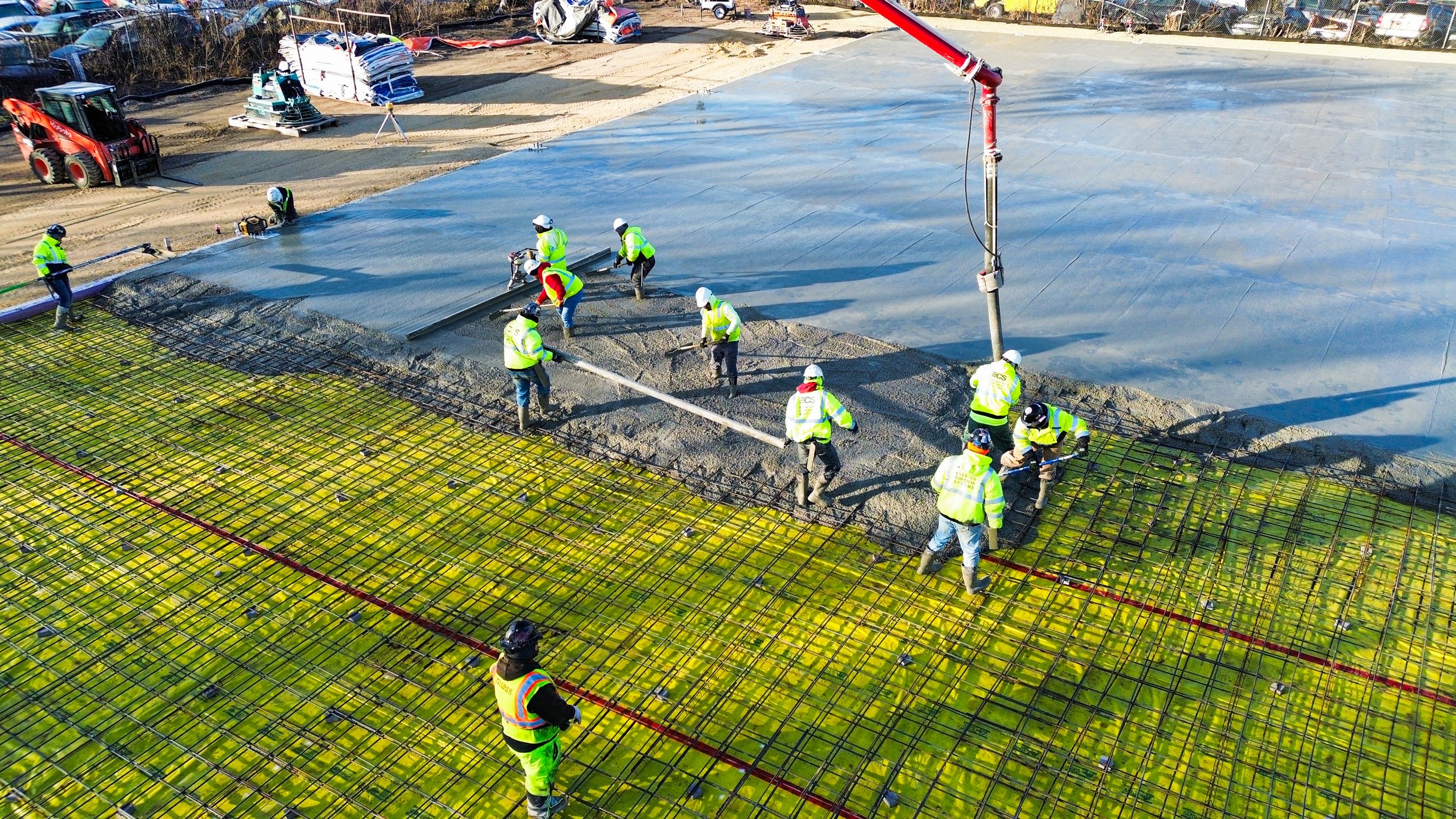
Curing is one of the most critical steps in any concrete project—yet it’s also one of the most misunderstood. Whether you’re building a commercial facility, pouring a warehouse slab, or tackling a smaller DIY project, curing directly influences concrete’s strength, durability, and long-term performance.
At Evenson Concrete Systems, we see the same curing mistakes repeated across Minnesota and the Midwest. These mistakes may seem small, but they can lead to cracking, spalling, moisture issues, and even complete structural failure over time.
This guide breaks down the seven most common concrete curing mistakes—and how to avoid them to ensure your concrete reaches maximum strength and stands up to heavy use for decades.
Inside the Blog:
1. Not Keeping Concrete Moist During Early Curing
2. Pouring and Curing Concrete in Extreme Temperatures
3. Removing Forms Too Early
4. Improper Finishing — Especially Overworking the Surface
5. Neglecting Proper Joint Placement
6. Using the Wrong Curing Method for the Project
7. Not Allowing Enough Curing Time Before Use
Final Takeaway: Avoid These Mistakes for a Stronger, Longer-Lasting Slab
1. Not Keeping Concrete Moist During Early Curing
One of the biggest misconceptions about concrete is that it needs to “dry out.” The opposite is true.
Concrete needs moisture to cure properly. The hydration process—the chemical reaction that gives concrete its strength—relies on water. If concrete dries too quickly, the reaction slows or stops, resulting in:
Surface cracking
Lower compressive strength
Poor surface durability
Scaling or dusting
How to avoid this mistake:
✔ Keep the concrete moist for the first 7 days (or longer for large slabs).
✔ Use curing blankets, plastic sheeting, or continuous misting.
✔ For commercial slabs, apply curing compounds to retain moisture.
Proper moisture retention is especially important in windy, hot, or dry conditions—common during summer construction.

2. Pouring and Curing Concrete in Extreme Temperatures
Temperature plays a significant role in the curing process of concrete. Both heat and cold can dramatically affect performance.
Hot Weather Risks:
Concrete dries too fast
Cracking and shrinkage
Poor finish quality
Incomplete hydration
Cold Weather Risks:
Hydration slows significantly
Water in the mix can freeze
Reduced strength
Surface scaling
How to avoid this mistake:
✔ In hot weather, pour early morning or evening and use sunshades or windbreaks.
✔ In cold weather, use heated enclosures, heated mix water, and thermal blankets.
✔ Never allow concrete to freeze within the first 24–48 hours.
✔ Follow ACI (American Concrete Institute) guidelines for cold-weather concreting.
At Evenson Concrete, our crews are trained in cold-weather pours—a must for Minnesota winters.
3. Removing Forms Too Early
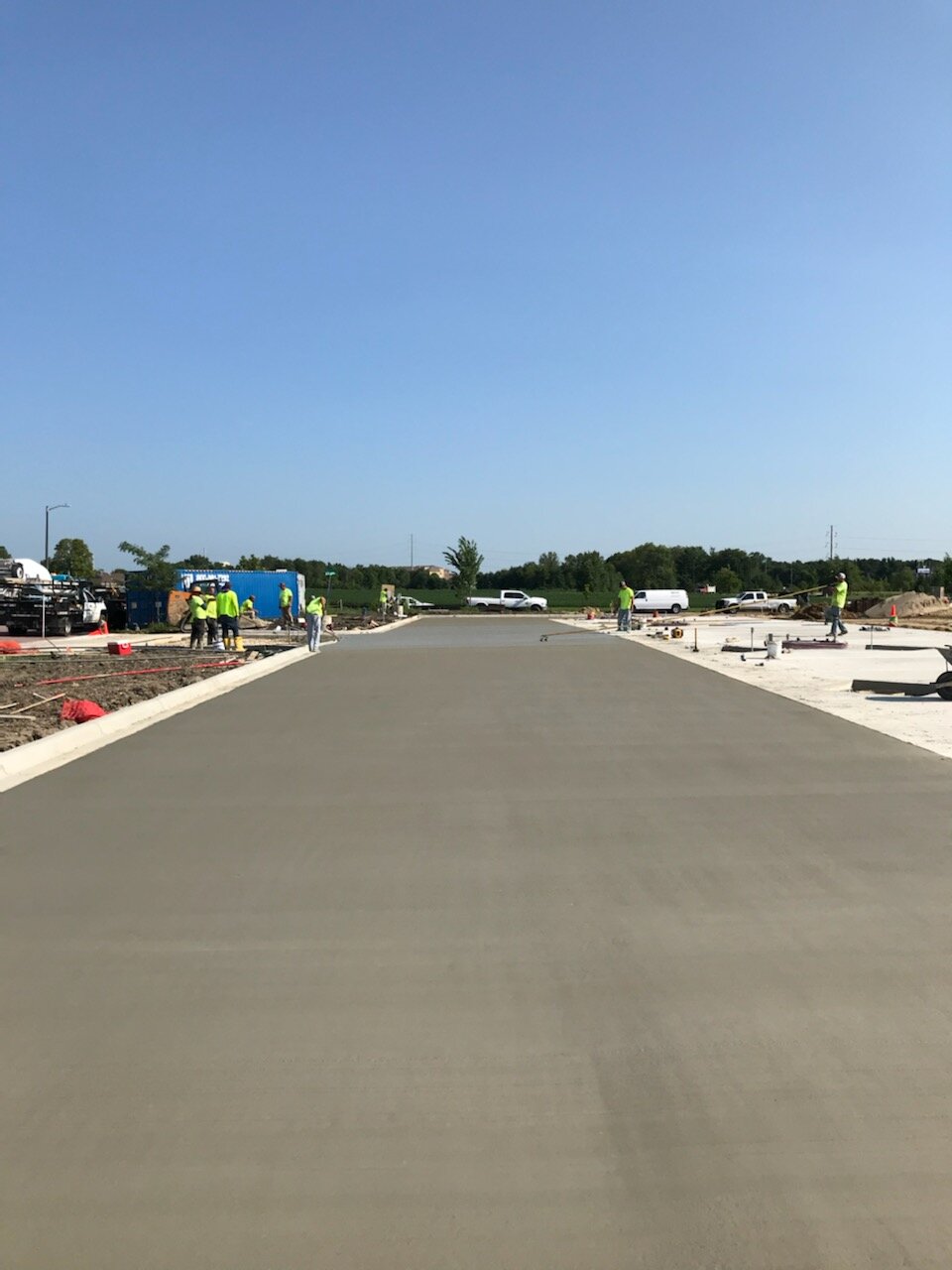
Forms provide essential support while concrete gains strength. Removing them too soon can cause sagging, cracking, or structural failure.
This mistake is common in DIY projects, but can also occur on tight-schedule commercial sites.
How to avoid this mistake:
✔ Wait until concrete has reached sufficient strength (often 50%+ of design strength).
✔ Follow structural engineer recommendations for formwork removal.
✔ Test concrete strength when necessary (common in large commercial pours).
Removing forms early may save a little time—but it’ll cost far more in repairs.
With decades of experience across Minnesota and the Upper Midwest, Evenson Concrete specializes in delivering high-performance slabs built to last.
Our process includes:
Soil and subgrade evaluation
Engineering collaboration
Custom mix designs
Proper reinforcement choices
Laser-precision grading
Advanced flatwork finishing
Strategic joint planning
Weather-adaptive curing techniques
We build slabs designed for strength, longevity, and reliability, no matter the application.

4. Improper Finishing — Especially Overworking the Surface
Finishing is an art form. Done incorrectly, it can trap water, weaken the surface, or cause scaling and delamination.
Common finishing mistakes include:
Overworking the surface
Troweling too early
Adding water to the surface
Finishing while the bleed water is still present
Bleed water must evaporate naturally. Working the surface while moisture is rising weakens the top layer, creating a fragile “cream” that can easily flake or dust.
How to avoid this mistake:
✔ Allow bleed water to fully evaporate before finishing.
✔ Do not add water to the surface.
✔ Use proper tools and sequences (screeding → bull floating → troweling → edging).
✔ Ensure finishing is done by trained professionals.
Commercial slabs—especially those used in warehouses and industrial floors—require precise finishing for optimal long-term performance.
5. Neglecting Proper Joint Placement
Concrete will crack—that’s a fact.
The goal is to control where and how it cracks using proper joint placement.
Skipping joints or placing them incorrectly is one of the biggest causes of:
Random cracking
Slab curling
Joint failure
Long-term slab weakness
How to avoid this mistake:
✔ Install control joints at the correct spacing (typically 24–36 times the slab thickness).
✔ Place joints within 6–12 hours after pouring.
✔ Ensure joints are cut to the proper depth (¼ of slab thickness).
✔ Use dowels and load-transfer systems when needed for heavy-duty slabs.
Proper joint planning is crucial for commercial buildings, such as warehouses, manufacturing facilities, and agricultural facilities.
6. Using the Wrong Curing Method for the Project
Not all curing methods work for all slabs. Some require moisture, others require protection from the elements, and some benefit from curing compounds or specialty membranes.
Common mistakes include:
Using plastic sheeting on windy sites where it can blow away
Skipping curing compound on large slabs
Applying curing compound too early or too late
Relying solely on weather to cure the slab
How to avoid this mistake:
✔ Choose a curing method based on climate, slab size, and performance requirements.
✔ Use white pigmented curing compounds for hot-weather pours.
✔ Use insulated blankets for cold-weather slabs.
✔ For high-performance floors, consider multi-step curing.
Evenson Concrete uses industry-approved methods tailored to each project to maximize durability.
7. Not Allowing Enough Curing Time Before Use
Concrete reaches approximately 70% of its strength in 7 days, but full curing typically takes 28 days or more. One of the most costly mistakes is placing weight or equipment on the slab too early.
This can cause:
Indentations
Microcracking
Surface failure
Long-term weakness in key traffic areas
How to avoid this mistake:
✔ Follow ACI standards for load timing.
✔ Keep vehicles and machinery off for a minimum of 7–14 days, depending on PSI.
✔ Allow slower, controlled curing for high-strength slabs.
✔ Never install flooring (epoxy, tile, carpet, or coatings) before moisture testing.
For commercial projects, Evenson Concrete coordinates closely with general contractors to manage traffic and ensure proper curing.
The Impact of Proper Curing: Why It Matters
When concrete is cured correctly, your slab will have:
Higher compressive strength
Greater resistance to cracking
Better freeze–thaw durability
Improved wear and abrasion resistance
Reduced maintenance costs
Longer lifespan
Improper curing is one of the leading causes of premature concrete failure—but it’s entirely preventable.
How Evenson Concrete Ensures Correct Curing on Every Project
At Evenson Concrete Systems, curing is never an afterthought. It’s a critical part of our process.
Our curing approach includes:
✔ Weather-appropriate curing methods
✔ Daily moisture checks during early curing
✔ Thermal protection during cold-weather pours
✔ Optimal joint placement and timing
✔ Precision finishing for long-term durability
✔ On-site supervision from start to finish
Whether you’re building a warehouse, agricultural facility, retail center, or industrial shop, our team ensures your slab is strong, stable, and built to last.
Final Takeaway: Avoid These Mistakes for a Stronger, Longer-Lasting Slab
Concrete curing isn’t difficult—but it does require attention to detail and an understanding of how weather, timing, and technique impact results. Avoiding these seven common mistakes will give your concrete the strength and durability it needs to stand up to decades of use.
Ready for High-Quality Concrete Work? Let’s Talk.
From industrial floors to commercial foundations, Evenson Concrete Systems delivers durable, high-performance concrete backed by decades of expertise.
Click here to request a consultation or estimate for your project today.