
Concrete Curing Time in Minnesota: What Cold Weather Means for Strength

In Minnesota, concrete doesn’t get the luxury of curing under ideal conditions for much of the year. With fluctuating temperatures, freezing nights, and unpredictable weather swings, curing concrete in cold climates demands expertise, meticulous planning, and precision. Understanding how cold weather affects concrete curing time—and what steps are necessary to protect strength and durability—is critical for long-lasting results.
Whether you’re pouring a commercial slab, warehouse floor, or structural foundation, concrete curing in Minnesota is a process that must be managed carefully. Here’s what cold weather really means for concrete strength, and how professional contractors ensure performance doesn’t suffer.
What Is Concrete Curing (and Why It Matters)
How Long Does Concrete Take to Cure in Minnesota?
Why Cold Weather Is a Risk for Concrete Strength
Ideal Temperature Ranges for Curing Concrete
Common Cold-Weather Curing Mistakes
Final Thoughts: Cold Weather Doesn’t Have to Compromise Concrete
What Is Concrete Curing (and Why It Matters)
Concrete curing is the process that allows cement to hydrate and gain strength over time. While concrete may appear “dry” on the surface within hours, curing is a chemical reaction that continues internally for weeks.
Proper curing:
Increases compressive strength
Improves durability and abrasion resistance
Reduces cracking, curling, and surface dusting
Enhances long-term performance
In ideal conditions—roughly 50–75°F—concrete cures predictably. In Minnesota, those conditions are often short-lived or nonexistent for much of the construction season.
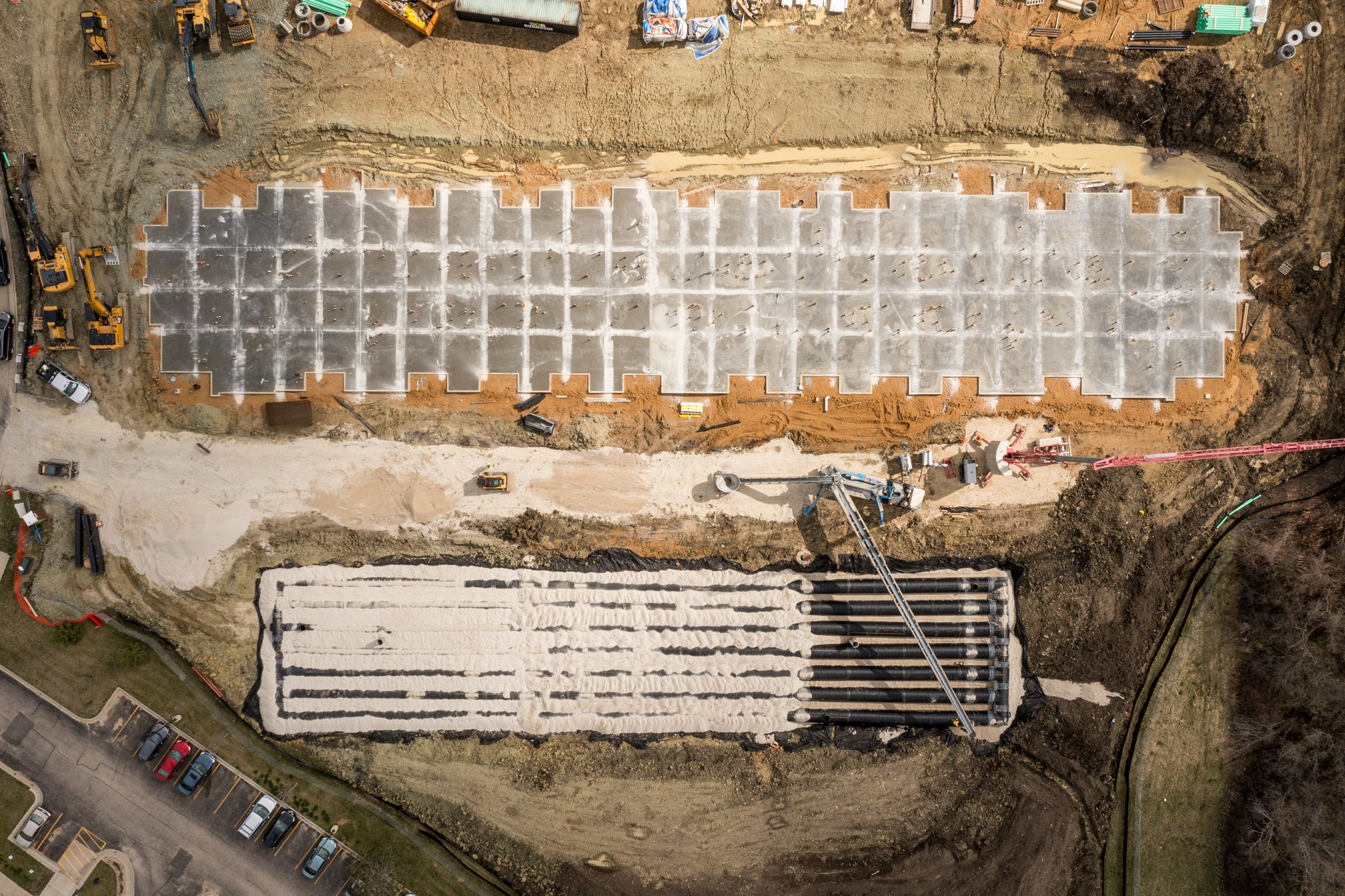
How Long Does Concrete Take to Cure in Minnesota?
Under normal conditions, concrete reaches:
Initial set: 24–48 hours
70% strength: ~7 days
Near full strength: ~28 days
However, cold weather slows hydration, meaning curing time can increase significantly if temperatures drop below 50°F.
In Minnesota conditions:
Concrete may take longer to reach finishing strength
Structural strength development can be delayed
Improper protection can permanently reduce strength
Cold doesn’t just slow curing—it can damage concrete if not managed correctly.
Why Cold Weather Is a Risk for Concrete Strength
1. Slowed Hydration Process
Concrete gains strength through hydration. When temperatures drop:
Chemical reactions slow
Strength development is delayed
Early-age concrete is vulnerable for longer periods
If temperatures fall below freezing before concrete gains enough strength, hydration can stop altogether.
2. Freeze Damage Before Strength Gain
Fresh concrete must reach approximately 500 psi before it can withstand freezing. If it freezes too early:
Ice crystals form inside the mix
Internal structure is weakened
Permanent strength loss can occur
This damage isn’t always visible immediately—but it shows up later as cracking, scaling, or premature failure.
3. Increased Risk of Surface Defects
Cold conditions increase the likelihood of:
Surface scaling
Dusting
Weak finishes
Delamination
Without proper curing techniques, even well-designed mixes can underperform.
Ideal Temperature Ranges for Curing Concrete
For optimal curing:
Concrete temperature should be maintained above 50°F
Protection is critical for the first 48–72 hours
Consistent temperatures matter more than daytime highs
In Minnesota, this often requires active temperature management—not just hoping the weather cooperates.
Best Practices for Curing Concrete in Minnesota
1. Use Cold-Weather Concrete Mix Designs
Experienced contractors adjust mixes for cold conditions by:
Using accelerators to speed hydration
Selecting appropriate cement types
Reducing excess water
Ensuring proper air entrainment
These adjustments help concrete gain strength faster without sacrificing quality.
2. Maintain Proper Concrete Temperature
Concrete temperature—not air temperature—is what matters most. Professional teams use:
Insulated blankets
Heated enclosures
Ground thawing systems
Temporary heating
The goal is to retain heat generated during hydration and prevent freezing during critical early stages.
3. Control Moisture Loss
Cold air is often dry, increasing evaporation risk. Proper curing methods include:
Curing compounds
Wet curing (when conditions allow)
Vapor barriers
Moisture retention is essential—even in winter.
4. Extend Protection Time
In cold climates, curing protection often needs to stay in place longer:
Additional days before stripping forms
Delayed loading or finishing activities
Extended monitoring of temperature and strength gain
Rushing this phase can undo all prior preparation.

Common Cold-Weather Curing Mistakes
Avoiding these mistakes is just as important as following best practices:
Removing blankets too early
Assuming daytime warmth is enough
Adding excess water to compensate for cold
Ignoring overnight temperature drops
Rushing finishing schedules
Concrete curing is not a step to rush—especially in Minnesota winters.
When Can Concrete Be Used After Cold-Weather Curing?
Usage timelines vary based on temperature control and mix design, but general guidelines include:
Foot traffic: 24–48 hours (with proper protection)
Light loads: 7–10 days
Full design loads: 28+ days (sometimes longer in winter)
Testing and professional judgment—not guesswork—should determine readiness.
Why Experience Matters in Minnesota Concrete Work
Cold-weather concrete requires more than textbook knowledge. It demands:
Real-world experience in Midwest conditions
Proactive planning
Constant monitoring
The right equipment and materials
Minnesota’s climate doesn’t forgive shortcuts. Proper curing protects your investment and ensures your concrete performs for decades—not just the first season.
Final Thoughts: Cold Weather Doesn’t Have to Compromise Concrete
Concrete curing time in Minnesota is longer, more complex, and more demanding—but with the right approach, cold weather doesn’t have to compromise strength or durability.
By using proper mix designs, temperature control methods, moisture management, and experienced crews, concrete can cure successfully even in challenging conditions.
When curing is treated as a managed process, not an afterthought, concrete delivers the performance it was designed for.
Concrete curing is not a step to rush, it’s a process to manage. If you’re planning a commercial slab, warehouse floor, or structural concrete project in Minnesota or the Midwest, partner with professionals who understand cold-weather curing inside and out.
Contact Evenson Concrete Systems to ensure your concrete cures properly, performs reliably, and stands the test of time—no matter the temperature.