
Minnesota Commercial Concrete Contractor: What to Look for Before Hiring
Choosing the right Minnesota commercial concrete contractorcan have a lasting impact on your construction project. Concrete is often one of the earliest and most important components of a commercial or industrial build, creating the foundation, floors, equipment pads, sidewalks, and other surfaces that must perform for years.
But not every concrete contractor has the experience, equipment, workforce, or project-management capabilities required for large commercial projects.
Whether you're planning a warehouse, manufacturing facility, agricultural building, retail development, school, or industrial expansion, selecting an experienced commercial concrete team can help keep your project moving while delivering the quality your facility requires.
If you're comparing commercial concrete contractors in MN, here are some of the most important factors to consider before making your decision.
1. Look for Commercial Concrete Experience
Commercial concrete is different from residential concrete.
A driveway or backyard patio involves very different requirements than a 50,000-square-foot warehouse floor, industrial foundation, or manufacturing facility.
Commercial concrete projects often require coordination between:
General contractors
Engineers
Architects
Ready-mix suppliers
Excavation crews
Steel contractors
Mechanical and electrical trades
Building owners
Your concrete contractor needs to understand construction schedules, specifications, sequencing, inspections, and coordination with other trades.
When evaluating a Minnesota commercial concrete contractor, ask about projects similar in size and scope to yours.
Experience with comparable work can provide confidence that the contractor understands what will be required before concrete trucks begin arriving.
The American Concrete Institute (ACI) provides standards, technical resources, and education covering many aspects of concrete design and construction.
2. Consider the Contractor's Range of Concrete Services
Commercial projects rarely involve only one type of concrete work.
Depending on the building, concrete construction may include:
Footings
Foundations
Slabs-on-grade
Warehouse floors
Industrial floors
Equipment pads
Loading areas
Sidewalks
Exterior concrete
Agricultural slabs
Working with a contractor capable of managing multiple portions of the concrete scope can simplify project coordination.
Before hiring, review what services the company provides and whether those services align with your project's needs.
For example, a warehouse project may require substantial slab-on-grade expertise, while a manufacturing facility may need floors designed around heavy machinery and concentrated loads.

3. Ask About Large Concrete Slab Experience
For warehouses, distribution centers, manufacturing facilities, and agricultural buildings, the floor is one of the most important components of the project.
Large commercial slabs require careful planning.
Contractors need to coordinate concrete delivery rates, placement equipment, crew size, finishing operations, reinforcement, joints, weather conditions, and curing.
The contractor should also understand requirements related to:
Slab thickness
Reinforcement
Floor flatness
Floor levelness
Joint layout
Concrete mixture
Curing
Construction sequencing
If your facility will use forklifts, storage racks, automated equipment, or heavy machinery, those operational requirements should be discussed early.
4. Understand How They Approach Site Preparation
Strong concrete starts with what's underneath it.
Proper subgrade and base preparation provide uniform support for a commercial slab and can help reduce future settlement and performance problems.
Depending on the project, preparation may include:
Excavation
Grading
Soil compaction
Aggregate base
Moisture management
Drainage
Frost considerations
Minnesota's climate makes proper preparation particularly important.
Freeze-thaw conditions and seasonal temperature changes can affect soils, exterior concrete, and construction schedules.
A commercial concrete contractor should understand the project's site conditions and work closely with the appropriate project partners to ensure the slab is placed on properly prepared supporting material.
The National Ready Mixed Concrete Association (NRMCA) offers technical resources covering concrete placement, curing, cracking, cold-weather concreting, and other topics relevant to commercial concrete construction.
5. Make Sure They Understand Minnesota Weather
Minnesota construction doesn't always happen under perfect conditions.
Spring can bring wet soils and temperature swings. Summer can bring heat, wind, and rapid moisture loss. Fall temperatures can change quickly, and winter creates obvious cold-weather challenges.
Experienced commercial concrete contractors in MN understand how weather affects concrete placement and curing.
Cold weather can slow concrete strength development, while hot and windy conditions can increase evaporation.
When temperatures drop, contractors may need strategies such as:
Insulated concrete blankets
Temporary enclosures
Heaters
Adjusted concrete mixtures
Temperature monitoring
Modified placement schedules
Weather planning should be part of the construction strategy rather than a last-minute reaction.
6. Ask About Concrete Curing
Concrete construction doesn't end when finishing is complete.
Curing is critical to developing strength and durability.
Proper curing helps maintain the moisture and temperature conditions necessary for cement hydration. Without appropriate curing, concrete can become more susceptible to surface problems, cracking, and reduced performance.
Curing methods vary depending on the application, specifications, weather, and concrete mixture.
They may include curing compounds, wet curing, coverings, or insulated protection.
When interviewing a Minnesota commercial concrete contractor, ask how curing will be handled and who is responsible for maintaining curing conditions.
A contractor focused on long-term quality should be thinking beyond the day of the pour.
7. Evaluate Safety Practices
Commercial construction sites involve people, equipment, concrete trucks, pumps, machinery, and multiple trades working simultaneously.
Safety needs to be part of the contractor's everyday operations.
Ask potential contractors about:
Safety training
Personal protective equipment
Jobsite procedures
Equipment operation
Communication
Site-specific safety requirements
The Occupational Safety and Health Administration (OSHA) provides federal construction safety requirements and resources for employers and workers.
A strong safety culture helps protect workers while supporting an organized and professional jobsite.

8. Communication Matters
Commercial projects involve constant coordination.
Schedules change. Weather changes. Material deliveries shift. Other trades may need access to the same areas.
A contractor who communicates clearly can help reduce confusion and keep the project team aligned.
Before hiring, consider:
Who will be your primary contact?
How are schedule updates communicated?
Who coordinates field operations?
How are project changes handled?
How does the field team communicate with project management?
Good communication may not appear on a set of drawings, but it can have a significant impact on the construction experience.
9. Don't Choose a Contractor Based on Price Alone
Cost matters on every construction project, but the lowest bid isn't automatically the best value.
When comparing concrete proposals, make sure you're comparing similar scopes.
One estimate may include items that another excludes.
Review details such as:
Site preparation
Concrete quantity and specifications
Reinforcement
Formwork
Placement
Finishing
Joints
Curing
Equipment
Mobilization
Weather protection
Clarifying the scope upfront can help prevent unexpected costs later.
A quality commercial concrete floor or foundation is intended to perform for years. The initial construction cost should therefore be considered alongside durability, maintenance, and long-term performance.
10. Look at Previous Commercial Concrete Projects
A contractor's completed work can tell you a lot about its capabilities.
Ask to see examples of projects involving:
Warehouses
Manufacturing
Agricultural facilities
Schools
Commercial developments
Industrial buildings
Large slabs
Look for projects similar to your own.
If you're building a warehouse, a contractor's warehouse and industrial concrete experience may be more relevant than an extensive portfolio of residential work.
11. Consider Their Equipment and Workforce
Large commercial concrete placements require more than experience, they require the resources to execute the work.
Contractors may need concrete pumps, laser screeds, finishing equipment, saws, placing equipment, and sufficiently sized crews to complete the work efficiently.
The size and capabilities of the contractor should align with the scale of the project.
Ask how the team plans to staff and equip your job, particularly if the project includes large pours or a demanding schedule.
12. Choose a Contractor Who Understands Your Facility
Concrete isn't one-size-fits-all.
A warehouse has different requirements from a farm shop. A manufacturing facility may have different loads than a retail building. An equipment storage facility may need to accommodate machinery that weighs significantly more than standard commercial traffic.
Your contractor should ask questions about how the building will function.
Those conversations may include:
Equipment weights
Forklift traffic
Storage racks
Loading operations
Floor drains
Future expansion
Vehicle traffic
Exterior exposure
Understanding how the facility will operate helps the entire project team make better decisions before construction begins.
Questions to Ask a Minnesota Commercial Concrete Contractor
Before making your final selection, ask:
How much commercial and industrial concrete experience do you have?
Have you completed projects similar to ours?
How will you staff our project?
How do you manage large slab placements?
How do you approach curing?
How do you handle Minnesota's hot- and cold-weather conditions?
Who will communicate with our project team?
What exactly is included in your proposal?
The goal isn't simply to hire someone who can pour concrete. It's to select a construction partner capable of supporting the project from planning through completion.
Looking for a Minnesota Commercial Concrete Contractor? Contact ECS
When your commercial or industrial project depends on quality concrete, experience matters.
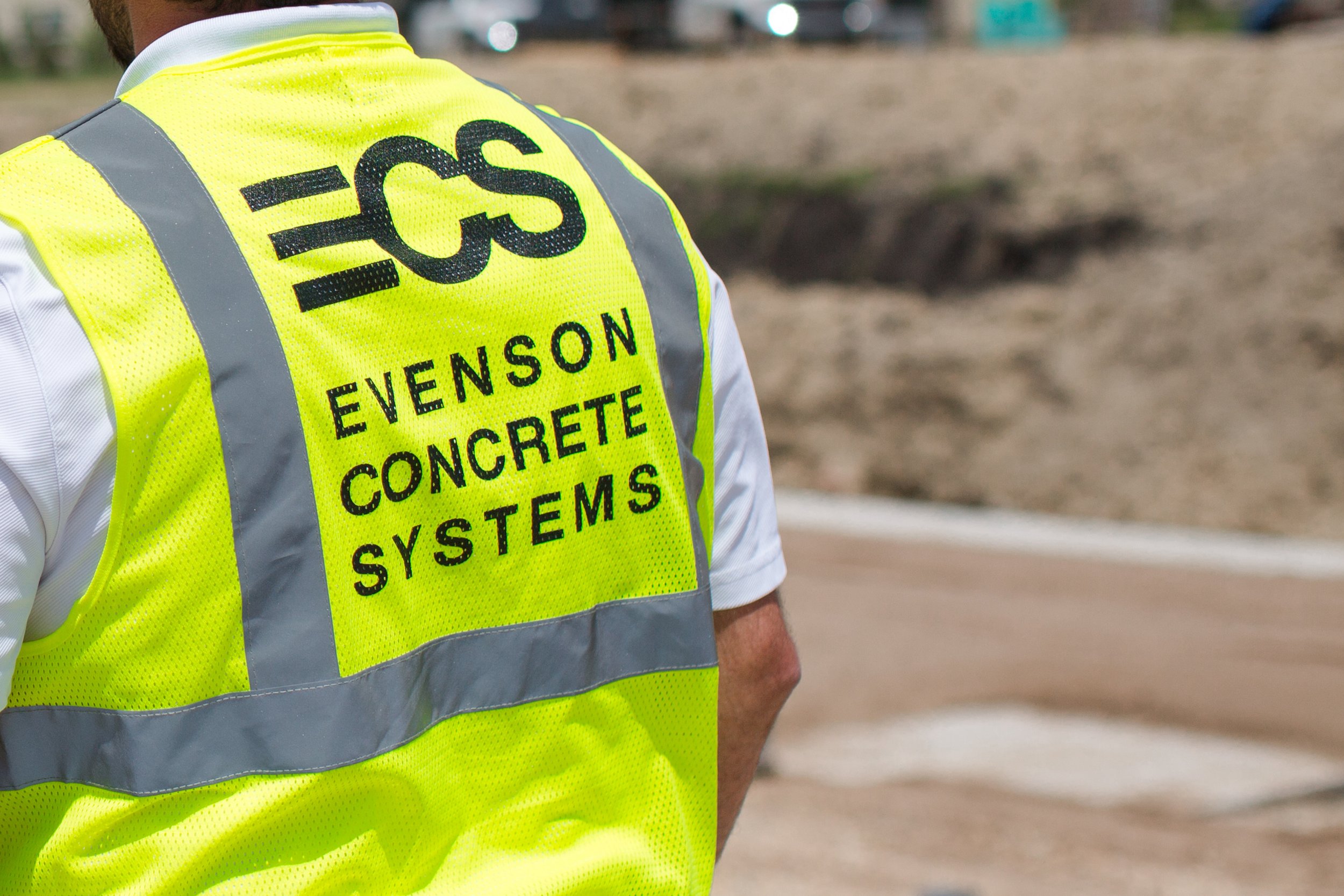
At Evenson Concrete Systems (ECS), we specialize in commercial concrete construction for projects throughout Minnesota. Our team understands the planning, coordination, craftsmanship, and attention to detail required for large-scale concrete work.
From commercial slabs and warehouse floors to industrial, agricultural, and other concrete applications, ECS focuses on building concrete solutions designed for long-term performance.
If you're comparing commercial concrete contractors in MN, involve ECS early in the process. Our team can work with your project partners to understand the scope, schedule, site conditions, and performance requirements before the first pour.
Planning a commercial, industrial, warehouse, manufacturing, or agricultural project? Contact Evenson Concrete Systems today to discuss your Minnesota commercial concrete needs and learn how ECS can help build your project from the ground up.