
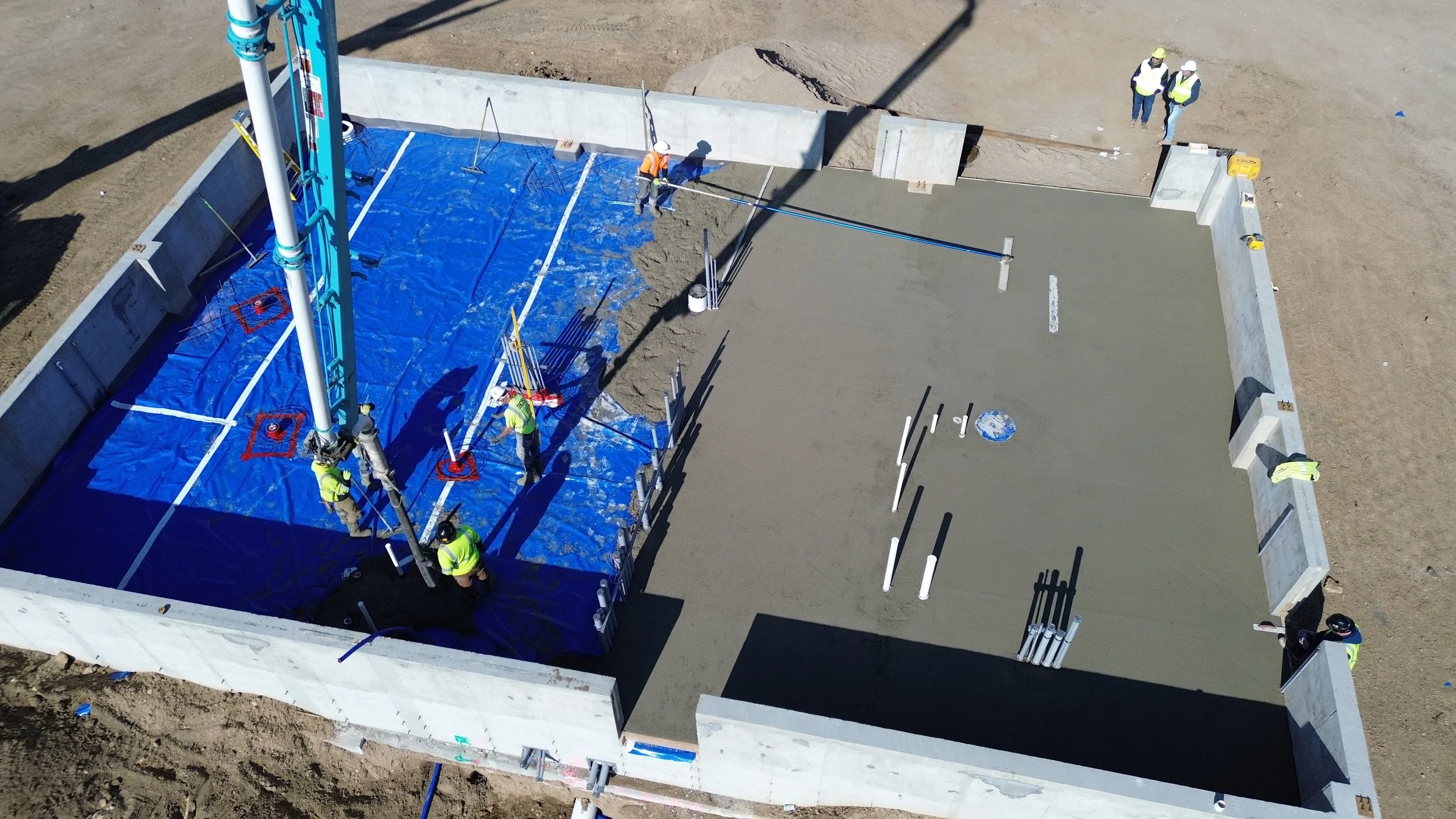
How long before you can drive on concrete? It's one of the most common questions after a concrete pour, and the answer matters for more than just convenience. Whether you're installing a commercial parking lot, warehouse floor, loading dock, equipment pad, or concrete driveway, allowing adequate time before opening the surface to traffic helps protect your investment.
Walking on concrete too early can damage the surface, while introducing vehicles or heavy equipment before the concrete develops sufficient strength can create more serious problems.
For general contractors, facility managers, and building owners, understanding concrete curing timelines is essential for coordinating construction schedules and avoiding unnecessary repairs.
At Evenson Concrete Systems (ECS), we understand that successful concrete construction doesn't end when the finishing crew leaves. Proper curing and carefully planned traffic access are important parts of achieving long-term performance.
Here's what you should know before walking, driving, or operating equipment on newly placed concrete.

1. How Long Before You Can Walk on New Concrete?
Under favorable conditions, newly placed conventional concrete may be firm enough for limited foot traffic after approximately 24 to 48 hours.
However, this is a general planning range, not a guarantee.
The actual timeline depends on the concrete mixture, temperature, finishing requirements, curing procedures, and the amount of strength the concrete has developed.
Light pedestrian traffic is very different from construction crews carrying equipment, rolling carts, or installing materials.
Even when concrete appears hard, the surface may still be vulnerable to scratching, abrasion, or damage.
For commercial projects, the concrete contractor should determine when access is appropriate based on project specifications and site conditions.
Important: A surface that feels hard to the touch has not necessarily developed sufficient strength for unrestricted use.
2. How Long Before You Can Drive on Concrete?
For many conventional concrete slabs placed under favorable conditions, approximately seven days is a commonly used planning guideline before considering light passenger-vehicle traffic.
However, the seven-day mark does not automatically mean a slab is ready for vehicles.
The appropriate opening time depends on the concrete's actual strength, slab design, anticipated loads, curing conditions, and the engineer's or project team's requirements.
A standard passenger vehicle creates different demands than a delivery truck, forklift, garbage truck, or loaded commercial vehicle.
For commercial concrete, the decision should be based on the required strength and intended use rather than the calendar alone.
General Concrete Traffic Timeline
General Concrete Traffic Timeline
| Time After Placement | Typical Considerations |
|---|---|
| First 24 hours | Keep traffic off the surface and protect fresh concrete. |
| 24–48 hours | Limited foot traffic may be possible with contractor approval. |
| 3–7 days | Concrete continues gaining strength; vehicle access requires evaluation. |
| Around 7 days | Light passenger-vehicle traffic may be considered if strength and project requirements permit. |
| 28 days | Common reference age for specified compressive strength, not an automatic opening date. |
Note: These timelines are general guidelines. Actual traffic access depends on concrete strength, weather, curing conditions, and project-specific requirements.
These timeframes are general examples for conventional concrete in favorable conditions. Some mixes gain strength faster, while cold weather or other factors can extend the timeline.
The American Concrete Institute (ACI) provides technical guidance on concrete strength development, curing, and construction practices.
3. Why Does Concrete Need Time Before Traffic?
Concrete doesn't simply dry and become strong.
It gains strength through a chemical reaction called hydration, which occurs when cement reacts with water.
This process begins shortly after mixing and continues as the concrete matures.
Proper curing helps maintain suitable moisture and temperature conditions so hydration can proceed.
Allowing traffic too early can introduce stresses before the concrete has developed adequate strength.
Potential consequences include surface damage, cracking, joint deterioration, and reduced serviceability.
The risk depends on the load, concrete strength, slab support, and construction details.
For additional information about concrete materials and performance, visit the National Ready Mixed Concrete Association (NRMCA).
4. Does Concrete Take 28 Days to Cure?
You've probably heard that concrete takes 28 days to cure.
This is a common oversimplification.
For many conventional concrete mixtures, 28 days is the standard reference age used to evaluate specified compressive strength.
However, concrete doesn't suddenly stop gaining strength on day 28.
Strength development can continue beyond that point when conditions remain favorable.
Likewise, concrete may develop enough strength for certain activities well before 28 days.
The key distinction is that curing time, strength development, and readiness for traffic are related but not identical.
A properly designed concrete pavement may be opened to traffic when it meets the specified opening criteria, even if that occurs before 28 days.
Other projects may require longer protection periods because of heavy loads, cold temperatures, or specialized construction requirements.
5. Five Factors That Affect When You Can Drive on Concrete
Several variables influence how quickly newly placed concrete can safely support traffic.
Concrete Mix Design
Different concrete mixtures develop strength at different rates.
Some mixes use materials or proportions selected for faster early strength development.
Others are designed to meet particular durability, workability, or long-term performance requirements.
The specified mixture should reflect the project's structural and operational needs.
Temperature and Weather
Temperature has a significant impact on concrete strength development.
Cold conditions generally slow hydration, which means concrete may require more time to develop adequate strength.
Hot conditions can accelerate early reactions but also increase the risk of moisture loss and finishing complications.
Curing Methods
Proper curing helps concrete develop its intended properties.
Depending on the project, curing may involve approved curing compounds, moisture-retaining coverings, or other specified methods.
Premature moisture loss can negatively affect surface quality and durability.
Slab Thickness and Reinforcement
Slab thickness, reinforcement, joint layout, and underlying support influence how a slab responds to loads.
A thicker slab is not automatically ready for traffic sooner, and reinforcement does not eliminate the need for adequate concrete strength.
The structural design must be considered when evaluating traffic access.
Vehicle Weight and Traffic Type
Passenger cars, pickup trucks, forklifts, delivery vehicles, and loaded tractor-trailers create different loading conditions.
Wheel loads, tire contact areas, repeated traffic, and vehicle turning movements can all affect concrete pavement performance.
Commercial traffic decisions should reflect the loads the slab was designed to carry.
6. When Can Heavy Trucks or Equipment Drive on New Concrete?
Heavy commercial vehicles require additional consideration.
A warehouse loading dock, industrial yard, or commercial truck parking area may experience concentrated wheel loads and repeated traffic that differ significantly from passenger-vehicle use.
For these applications, there is no universal number of days that guarantees the concrete is ready.
The opening decision should consider:
Specified concrete strength and verified strength development.
Slab thickness and structural design.
Subgrade and base support.
Joint construction and load transfer.
Vehicle weight and wheel loading.
Construction and operational traffic patterns.
Where required, field-cured specimens, maturity testing, or other approved methods can help evaluate in-place strength.
The Federal Highway Administration (FHWA) offers resources related to concrete pavement design, construction, and performance.
For general contractors, coordinating equipment access before placement is especially important. Heavy trucks or lifts should not be allowed onto new concrete simply because the surface looks finished.
7. How Does Minnesota Weather Affect Concrete Traffic Timelines?
In Minnesota, seasonal weather can significantly influence concrete construction schedules.
During fall and winter, lower temperatures slow strength development unless appropriate temperature-control measures are implemented.
Fresh concrete may require insulating blankets, heated enclosures, or other protection specified for the project.
Concrete placed during cold weather must also be protected from freezing before it develops adequate early strength.
During warmer months, wind, low humidity, and high temperatures can accelerate moisture loss from exposed surfaces.
These conditions can affect finishing, curing, and long-term performance.
The Minnesota Department of Transportation (MnDOT) provides concrete-related materials information and specifications relevant to Minnesota construction.
GC Tip: Build realistic curing and traffic-access requirements into the project schedule before concrete placement. Weather protection and strength verification may affect when subsequent trades can begin work.
8. What Happens If You Drive on Concrete Too Soon?
Opening newly placed concrete to traffic prematurely can create problems that may not be immediately visible.
Depending on the slab's strength, support conditions, and applied loads, early traffic can contribute to surface damage, cracking, or distress near joints and edges.
Heavy vehicles can be especially demanding because concentrated wheel loads may introduce substantial stresses.
Premature traffic may also interfere with curing procedures or damage protective coverings.
For commercial projects, these problems can result in repairs, additional expenses, and scheduling disruptions.
Waiting until the concrete meets the required opening criteria is generally more cost-effective than risking damage to a newly constructed surface.
9. How Can General Contractors Plan for Concrete Curing Time?
Successful commercial concrete construction requires coordination between the concrete subcontractor, general contractor, testing agency, and other trades.
Before placement, project teams should establish when the slab will need to support pedestrian traffic, construction equipment, material deliveries, and permanent operational loads.
A practical plan should identify traffic restrictions, required strength verification, curing responsibilities, and weather-related contingencies.
General contractors should also communicate access limitations to other subcontractors.
For example, installing equipment or delivering heavy materials too early can create unnecessary risks, even when the concrete surface appears ready.
Clear communication helps prevent scheduling conflicts and protects completed work.
10. Frequently Asked Questions About Driving on New Concrete
Can I walk on concrete after 12 hours?
Sometimes concrete may appear firm after 12 hours, but walking on it that soon can damage the surface. Wait for approval from the concrete contractor. For conventional concrete under favorable conditions, 24–48 hours is a more cautious general planning range for limited foot traffic.
Can I drive on new concrete after three days?
Three days may be too early for conventional concrete, especially when strength development is slow. Some specially designed mixtures may permit earlier opening, but traffic should only begin when the required strength and project conditions are satisfied.
Is seven days enough before driving on concrete?
Seven days is a common planning reference for light passenger vehicles under favorable conditions, but it is not a universal rule. Confirm the opening requirements with the concrete contractor or project engineer.
Can heavy trucks drive on concrete after seven days?
Not necessarily. Heavy truck traffic requires evaluation of concrete strength, pavement design, wheel loads, and support conditions. Commercial concrete should not be opened to heavy traffic based solely on elapsed time.
Does thicker concrete take longer before vehicles can use it?
Thickness alone does not determine the opening date. Concrete strength development, structural design, curing conditions, and expected loads all influence when traffic can begin.
Plan Your Next Commercial Concrete Project With ECS
Understanding how long before you can drive on concrete is an important part of protecting your investment and keeping commercial construction projects on schedule.
While light foot traffic may be possible within a couple of days and passenger-vehicle access may be considered after approximately a week, actual opening requirements depend on the project.
For warehouses, industrial facilities, loading docks, commercial parking areas, and equipment pads, the concrete must be ready for the loads it will experience.
At Evenson Concrete Systems (ECS), we understand the importance of proper placement, curing, scheduling, and communication throughout the concrete construction process.
Whether you're planning a new commercial facility, industrial concrete slab, or agricultural construction project, early coordination helps establish realistic expectations.
Have a commercial concrete project coming up? Send us your plans!
Contact Evenson Concrete Systems to discuss your upcoming project and concrete construction needs.