
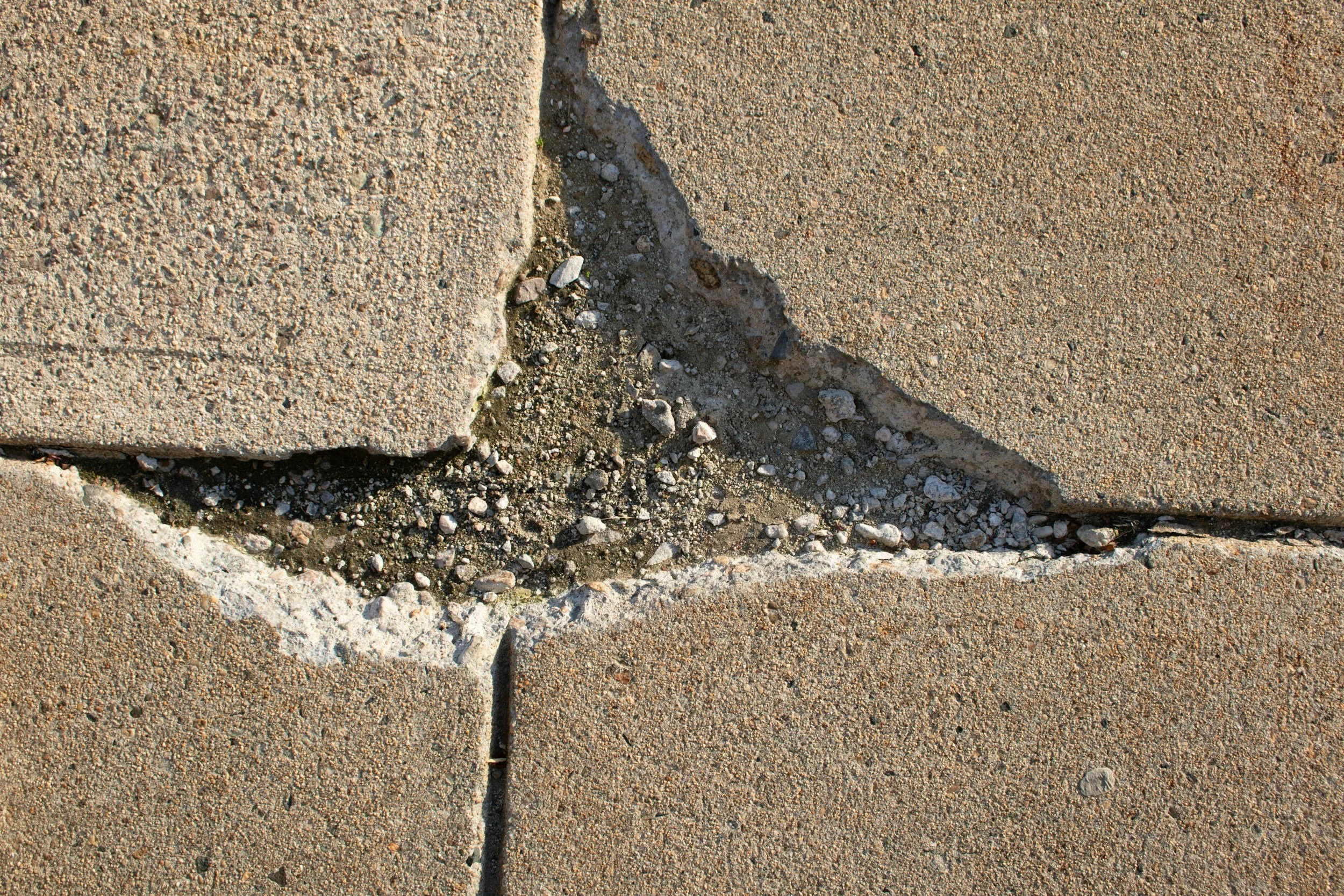
Concrete is one of the strongest and most widely used construction materials, but even newly poured concrete can develop cracks. Whether it's a commercial warehouse floor, industrial foundation, sidewalk, or parking area, understanding why concrete cracks is essential to maintaining structural integrity and long-term durability.
At Evenson Concrete Systems (ECS), we understand that quality concrete construction requires more than simply pouring and finishing a slab. Proper planning, mix design, reinforcement, placement, and curing all play critical roles in minimizing cracking and extending the lifespan of concrete structures.
While some cracking is a natural characteristic of concrete, not all cracks are created equal. Certain cracks are primarily cosmetic, while others may indicate structural concerns, improper installation, or environmental damage.
In this guide, we'll explore seven common reasons new concrete cracks, how to prevent them, and when it's time to contact a professional commercial concrete contractor.
1. Concrete Shrinkage During Curing
One of the most common reasons new concrete cracks is shrinkage.
As concrete hardens and moisture leaves the material, it naturally contracts. When that movement is restrained, tensile stresses can develop. Because concrete has relatively low tensile strength, cracks may form when those stresses exceed its capacity.
Two common types of shrinkage include:
Plastic shrinkage: Occurs while concrete is still fresh, often when surface moisture evaporates faster than it can be replaced.
Drying shrinkage: Develops as hardened concrete gradually loses moisture and contracts.
Shrinkage cracks may appear as fine surface lines or longer cracks extending across a slab.

How to prevent shrinkage cracks
Use an appropriate concrete mix design with controlled water content.
Begin curing at the proper time.
Protect fresh concrete from excessive wind and sunlight.
Install properly designed control joints.
Avoid unnecessary water additions during placement.
According to the American Concrete Institute (ACI), appropriate curing practices and joint design are important considerations for controlling cracking.
Although shrinkage cannot be eliminated entirely, proper construction practices can help manage where and how cracking occurs.
2. Improper Concrete Curing
Concrete curing is one of the most important steps in achieving long-term strength and durability.
Contrary to popular belief, concrete doesn't simply dry to become strong. Cement reacts chemically with water through a process called hydration.
If moisture escapes too quickly, hydration may be interrupted, reducing surface strength and increasing the potential for cracking.
This is particularly important for commercial concrete floors, where durability and abrasion resistance directly affect daily operations.
How to prevent curing-related cracks
Proper curing begins with selecting a method appropriate for the project.
Common techniques include:
Applying approved curing compounds.
Using moisture-retaining coverings.
Maintaining suitable concrete temperatures.
Protecting slabs from premature drying.
Following project-specific curing requirements.
The National Ready Mixed Concrete Association (NRMCA) provides educational resources on concrete construction, including curing and quality-control practices.
The takeaway: Proper curing helps concrete develop the strength and durability needed to perform under demanding commercial conditions.
3. Excess Water in the Concrete Mix
Adding too much water to concrete may make it easier to place, but it can significantly affect the finished product.
An excessive water-to-cementitious-materials ratio can increase shrinkage, reduce strength, and create a more permeable concrete surface.
As the excess water evaporates, the concrete contracts. Greater shrinkage can increase the likelihood of cracking, particularly when movement is restrained.
For commercial projects, improper water content can also contribute to surface deterioration and reduced abrasion resistance.
How to prevent water-related cracking
Experienced concrete contractors work with ready-mix suppliers to select concrete mixes appropriate for specific applications.
Important considerations include:
Required compressive strength
Slump and workability
Aggregate selection
Cementitious materials
Chemical admixtures
Environmental conditions
Instead of adding unnecessary water, contractors may use approved water-reducing admixtures to achieve the required workability.
Proper mix design is especially important for industrial concrete floors, commercial foundations, and heavily loaded slabs.
4. Extreme Weather Conditions
Minnesota's changing weather creates unique challenges for concrete construction.
High temperatures, freezing conditions, wind, and fluctuating humidity can all influence how concrete sets, cures, and develops strength.
Hot-weather concrete cracking
During summer, high temperatures and low humidity can accelerate moisture evaporation.
Wind can make conditions even more challenging, increasing the likelihood of plastic shrinkage cracks.
Cold-weather concrete cracking
Cold temperatures slow cement hydration and strength development.
If newly placed concrete freezes before developing adequate strength, internal damage may occur.
Repeated freeze-thaw cycles can also contribute to deterioration in concrete that is improperly designed, placed, cured, or protected.
How to prevent weather-related cracking
Monitor weather forecasts before placement.
Schedule pours during favorable conditions when possible.
Use windbreaks and shade during hot-weather placement.
Protect concrete from freezing during early strength development.
Use appropriate air-entrained concrete for applicable exterior exposures.
Maintain suitable curing temperatures.
The Portland Cement Association offers technical resources addressing concrete performance, durability, and construction practices.
For commercial projects throughout Southern Minnesota, planning around seasonal weather is essential.
5. Poor Soil Preparation and Settlement
Sometimes the problem isn't the concrete itself. It's what's underneath it.
Concrete slabs depend on stable, properly prepared supporting materials.
If the soil or aggregate base beneath a slab settles unevenly, the concrete may experience bending and tensile stresses that lead to cracking.
Common causes of settlement include:
Inadequate soil compaction
Poor drainage
Unsuitable fill materials
Changes in soil moisture
Erosion beneath the slab
Inconsistent subgrade support
Settlement-related cracking can become especially problematic for warehouse floors, sidewalks, parking areas, and industrial facilities.
How to prevent settlement cracks
Proper site preparation is essential before concrete placement.
This may involve evaluating soil conditions, removing unsuitable materials, installing engineered fill, and compacting the supporting base to project specifications.
Drainage also plays an important role.
Water accumulation beneath concrete can contribute to soil movement and erosion, potentially affecting long-term slab performance.
For commercial concrete construction, coordination between sitework contractors, engineers, and concrete crews helps create a stable foundation for the finished project.
6. Improper Joint Placement
Concrete naturally expands and contracts as temperatures and moisture conditions change.
Without properly designed joints, these movements can create stresses that result in uncontrolled cracking.
Control joints, also called contraction joints, are intentionally placed weakened planes that encourage shrinkage cracking to occur at planned locations.
Why concrete joints matter
Joints help manage cracking while maintaining a more predictable slab appearance and performance.
Common joint types include:
Control joints: Encourage cracks to form at designated locations.
Isolation joints: Separate slabs from columns, walls, and other structures to accommodate movement.
Construction joints: Identify locations where separate concrete placements meet.
How to prevent joint-related cracking
Proper joint layout should account for slab thickness, geometry, reinforcement, anticipated movement, and project specifications.
Saw-cut timing is also important. Cutting too early may damage the edges of the joint, while cutting too late may allow random cracking to develop first.
Commercial concrete contractors follow engineering requirements and established industry guidance when determining joint locations and installation methods.
Even with proper joints, some cracking may still occur. The goal is to reduce uncontrolled cracking and support long-term slab performance.
7. Excessive Loads or Premature Traffic
Concrete requires time to develop strength before supporting heavy loads.
Although a newly placed slab may appear hard after a day or two, it may not yet have the strength needed for construction equipment, vehicles, or industrial operations.
Premature loading can contribute to cracking, particularly when combined with inadequate support or other construction-related stresses.
Commercial applications frequently involve demanding loads from:
Forklifts and pallet jacks
Heavy machinery
Storage racks
Delivery trucks
Construction equipment
Manufacturing operations
How to prevent load-related cracks
Before allowing heavy traffic or equipment onto new concrete, contractors should confirm that the slab has developed sufficient strength for the intended loading.
This may require compressive-strength testing, maturity monitoring, or other approved verification methods.
Concrete slab thickness, reinforcement, joint design, and subgrade support must also be appropriate for anticipated loads.
For warehouses and manufacturing facilities, these considerations are especially important because floor performance directly affects productivity and safety.
Are Cracks in New Concrete Normal?
Some cracking is common in concrete construction because concrete naturally experiences shrinkage, temperature changes, and restrained movement.
However, the presence of a crack doesn't automatically mean a slab is defective.
The significance depends on several factors, including:
Crack width and depth
Location and pattern
Whether the crack is growing
Differential movement or settlement
Moisture infiltration
Structural loading
Intended use of the concrete
Hairline cracks may be primarily cosmetic, while widening cracks, vertical displacement, or cracks affecting load-bearing elements may require professional evaluation.
When in doubt, a qualified concrete professional or structural engineer can help determine whether repairs or additional investigation are necessary.
Why Concrete Crack Prevention Matters for Commercial Construction
For commercial and industrial property owners, preventing avoidable concrete cracks is about more than appearance.
Cracking can affect long-term maintenance costs, operational efficiency, and the overall performance of a facility.
A damaged warehouse floor, for example, may create problems for forklifts or material-handling equipment. Exterior cracks may allow moisture and deicing chemicals to penetrate the concrete, potentially contributing to future deterioration.
Investing in proper concrete construction practices can help reduce these risks.
At Evenson Concrete Systems, we understand the importance of delivering durable concrete solutions for schools, warehouses, manufacturing facilities, retail developments, agricultural buildings, and municipal infrastructure.
From preparing for placement to finishing and curing, every stage contributes to the finished product.
Frequently Asked Questions About Concrete Cracking
Why does concrete crack shortly after being poured?
Early cracking may result from rapid moisture evaporation, plastic shrinkage, settlement, or restrained movement. The cause depends on the timing, crack pattern, and placement conditions.
Can you completely prevent concrete from cracking?
No concrete contractor can guarantee completely crack-free concrete. However, proper mix design, reinforcement, joint placement, curing, and site preparation can significantly reduce the likelihood and severity of uncontrolled cracking.
Does cracked concrete mean it needs to be replaced?
Not necessarily. Some cracks are cosmetic and may require little or no repair. Others may need sealing, structural evaluation, or corrective work depending on their cause and severity.
How long should concrete cure before heavy equipment is used?
There is no universal timeline. Loading should be based on the concrete's verified strength, slab design, supporting conditions, and project requirements rather than age alone.
Build Stronger, Longer-Lasting Concrete With ECS
Understanding why concrete cracks is the first step toward preventing avoidable problems. From shrinkage and improper curing to extreme weather, unstable soil, and excessive loads, many factors can influence concrete performance.
While cracking cannot always be eliminated, experienced planning and construction practices can make a significant difference.
At Evenson Concrete Systems, we believe quality concrete starts long before the first truck arrives. Our team works to deliver dependable commercial concrete solutions built for strength, durability, and long-term performance.
Whether you're planning a commercial foundation, industrial floor, school addition, warehouse, or municipal project, ECS brings the experience and craftsmanship needed to help build it right.
Ready to get your next commercial concrete project started? Visit Evenson Concrete Systems to learn more about our work and connect with our team.