
Why Proper Curing Matters: The Key to Long-Lasting Concrete Performance
Concrete is one of the most durable and widely used building materials in commercial and industrial construction. From warehouse floors and manufacturing facilities to agricultural buildings and retail developments, concrete provides the strength and longevity needed to support demanding operations. However, even the best concrete mix can fail prematurely if one critical step is overlooked: proper curing.
At Evenson Concrete Systems (ECS), we know that a successful concrete project doesn't end when the final finishing pass is complete. In many ways, the most important phase is just beginning. Proper curing is essential to achieving the strength, durability, and long-term performance that owners and facility managers expect from their concrete investment.
In this guide, we'll explore why concrete curing matters, how it affects performance, common curing mistakes, and best practices that help ensure concrete reaches its full potential.
Inside the blog:
What Is Concrete Curing?
Why Curing Is Critical to Concrete Strength
How Curing Affects Durability
The First Seven Days Are Critical
Final Thoughts
What Is Concrete Curing?
Concrete curing is the process of maintaining adequate moisture and temperature conditions after placement to allow cement to continue hydrating and gaining strength.
When water is mixed with cement, a chemical reaction called hydration begins. This reaction continues for days, weeks, and even months after placement. Proper curing allows hydration to progress effectively, resulting in stronger, more durable concrete
According to the American Concrete Institute (ACI), curing is one of the most critical factors influencing concrete quality and long-term performance.
Without adequate curing, concrete may lose moisture too quickly, leading to hydration stopping before the material reaches its intended strength.

Why Curing Is Critical to Concrete Strength
Many people assume concrete reaches its strength once it hardens enough to walk on. In reality, concrete continues gaining strength long after placement.
A properly cured concrete slab can achieve significantly greater compressive strength compared to a slab that dries prematurely.
Research from the Portland Cement Association shows that inadequate curing can reduce concrete strength by up to 50 percent in extreme cases.
Proper curing helps:
Increase compressive strength
Improve flexural strength
Enhance abrasion resistance
Reduce cracking
Improve freeze-thaw durability
Extend service life
Reduce maintenance costs
For commercial and industrial facilities, these benefits directly impact operational efficiency and long-term ownership costs.
How Curing Affects Durability
Strength is only part of the equation. Proper curing also plays a major role in durability.
Concrete structures face numerous environmental challenges, including:
Freeze-thaw cycles
Chemical exposure
Heavy equipment traffic
Moisture infiltration
Temperature fluctuations
Deicing salts
When concrete cures properly, the cement paste develops a denser microstructure. This reduces permeability and helps prevent water and contaminants from penetrating the slab.
The National Ready Mixed Concrete Association (NRMCA) emphasizes that lower permeability is one of the most important factors in producing durable concrete.
For warehouses, manufacturing facilities, cold storage buildings, and agricultural structures, durability often determines whether a floor lasts decades or requires premature repairs.
Common Problems Caused by Improper Curing
Failing to cure concrete correctly can lead to a variety of costly issues.
Surface Cracking
One of the most common problems is plastic shrinkage cracking. When moisture evaporates from the surface faster than it can be replenished, the concrete begins to shrink before it gains sufficient strength. This creates cracks that can worsen over time.
Dusting
Dusting occurs when the surface becomes weak and begins breaking down under traffic. Poor curing often results in insufficient surface strength, leading to premature dusting and wear on concrete floors.
Reduced Strength
Concrete that loses moisture too early may never achieve its design strength. This can compromise structural performance and shorten the slab's lifespan.
Curling and Warping
Uneven moisture loss can cause slabs to curl at the edges. Curling creates trip hazards, increases forklift impact, and contributes to joint deterioration.
Scaling and Surface Deterioration
In climates like Minnesota, improperly cured concrete is especially vulnerable to freeze-thaw damage. Water enters the surface, freezes, expands, and gradually breaks apart the concrete.
Increased Maintenance Costs
All of these issues can lead to:
Floor repairs
Joint replacement
Coating failures
Surface grinding
Premature slab replacement
The cost of proper curing is minimal compared to the expense of corrective repairs.
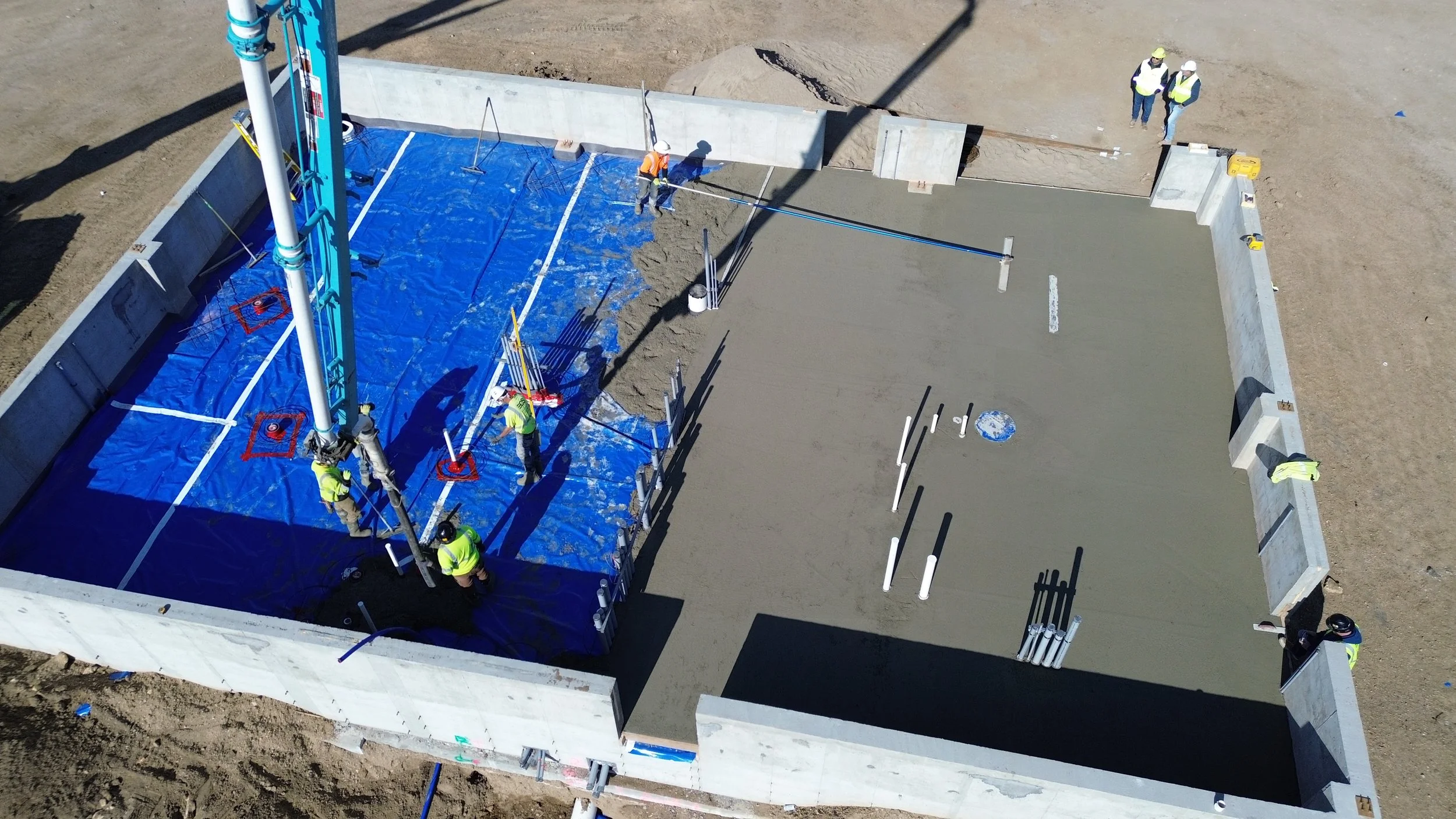
The First Seven Days Are Critical
While concrete continues to gain strength over the years, the first week after placement is especially important. According to guidance from the Federal Highway Administration (FHWA), maintaining adequate moisture during the first seven days significantly impacts long-term performance.
During this period:
Hydration occurs rapidly
Strength develops quickly
Moisture loss can cause irreversible damage
Surface durability is established
Protecting concrete during these early days helps maximize its long-term performance.
Curing Methods Used in Commercial Construction
There are several methods for effectively curing concrete.
Water Curing
Water curing keeps the concrete surface continuously moist. Methods include:
Ponding
Sprinkling
Wet coverings
Soaker hoses
Water curing is highly effective because it provides the moisture needed for ongoing hydration.
Curing Compounds
Liquid curing compounds are commonly used on commercial projects.
These products create a membrane that slows moisture evaporation and helps maintain hydration.
Benefits include:
Efficient application
Cost effectiveness
Consistent coverage
Reduced labor requirements
Moisture-Retaining Covers
Plastic sheets and curing blankets help trap moisture within the slab. These methods are particularly useful during windy conditions or when temperatures fluctuate significantly.
Temperature-Controlled Curing
Minnesota weather presents unique challenges. During cold-weather placements, concrete may require:
Insulated blankets
Heated enclosures
Temporary shelters
Maintaining proper temperatures ensures hydration continues as intended.
Why Curing Matters for Industrial Floors
Industrial floors face some of the toughest conditions in construction. Forklifts, pallet jacks, racking systems, heavy machinery, and constant traffic place enormous stress on concrete slabs.
Proper curing helps industrial floors achieve:
Higher abrasion resistance
Better surface hardness
Reduced cracking
Improved load-bearing capacity
At ECS, we understand that industrial facilities depend on durable floors that can withstand years of demanding use. Investing in proper curing is one of the most effective ways to maximize floor performance.
Curing Challenges in Minnesota
Minnesota's climate creates unique curing challenges year-round.
Summer Conditions
Hot temperatures, low humidity, and wind can accelerate evaporation. When moisture leaves the surface too quickly, cracking and surface defects become more likely.
Winter Conditions
Cold temperatures slow hydration. If concrete freezes before reaching adequate strength, permanent damage may occur.
Seasonal Temperature Swings
Rapid temperature fluctuations can create thermal stress and increase the risk of cracking. Experienced concrete contractors account for these variables when developing curing plans.
The Relationship Between Curing and Sustainability
Proper curing isn't just good for performance—it also supports sustainability. Longer-lasting concrete means:
Fewer repairs
Reduced material consumption
Less waste
Lower lifecycle costs
The U.S. Green Building Council (USGBC) promotes durable construction practices because longer building lifespans reduce environmental impact. When concrete lasts longer, owners avoid the environmental and financial costs associated with replacement and reconstruction.
Best Practices for Proper Concrete Curing
To maximize concrete performance, contractors should follow several key best practices.
Begin Curing Immediately
Curing should start as soon as finishing operations are complete and the surface can support the selected curing method.
Maintain Consistent Moisture
Avoid allowing the slab to dry out during the critical early curing period.
Protect Against Extreme Temperatures
Monitor weather conditions and implement temperature control measures when necessary.
Use Appropriate Curing Products
Select curing compounds and methods that match project requirements.
Follow Industry Standards
Contractors should adhere to guidance established by organizations such as ACI and NRMCA.
Work With Experienced Concrete Professionals
Experienced concrete teams understand how environmental conditions, mix designs, and project requirements affect curing strategies.
Why ECS Prioritizes Proper Curing
At Evenson Concrete Systems, quality doesn't stop when the concrete is poured. Our team understands that curing plays a major role in the overall success of every project. Whether we're constructing industrial floors, commercial foundations, warehouse slabs, agricultural facilities, or large-scale site concrete, we implement curing practices designed to maximize performance and durability.
Our approach focuses on:
Long-term concrete performance
Reduced maintenance costs
Improved durability
Enhanced surface quality
Superior client outcomes
Because we know every concrete project represents an investment, we take the necessary steps to help ensure that investment performs for years to come.
Final Thoughts
Concrete is designed to be strong, durable, and long-lasting, but it can only achieve its full potential when properly cured.
The curing process directly impacts strength, durability, surface quality, crack resistance, and overall service life. Skipping or shortening this critical step can lead to costly repairs, reduced performance, and premature deterioration.
For commercial and industrial facilities, proper curing is one of the smartest investments that can be made during construction.
When you partner with Evenson Concrete Systems, you're working with a team that understands every stage of the concrete process—from planning and placement to finishing and curing. Our commitment to quality ensures your concrete is built to perform today and for decades to come.
Contact Evenson Concrete Systems
Planning a commercial, industrial, agricultural, or specialty concrete project? Evenson Concrete Systems delivers durable, high-performance concrete solutions backed by decades of industry experience. Contact our team today to discuss your next project and learn how our commitment to quality craftsmanship helps ensure long-term success.