
Reinforced Concrete Slabs for Warehouses: Design, Costs, and Benefits
Warehouses are the backbone of today's supply chain, supporting everything from inventory storage and distribution to manufacturing and logistics operations. While steel structures, loading docks, and racking systems often receive much of the attention, one of the most critical components of any warehouse is the floor beneath it all, the reinforced concrete slab.
A properly designed reinforced concrete slab serves as the foundation for daily operations, supporting heavy loads, forklift traffic, storage systems, and equipment while maintaining long-term durability and performance. Whether you're building a new warehouse or expanding an existing facility, understanding the design, costs, and benefits of reinforced concrete slabs can help ensure a successful project.

In this guide, we'll explore everything warehouse owners, developers, and facility managers need to know about reinforced concrete slabs and why they remain the preferred solution for industrial construction.
What Is a Reinforced Concrete Slab?
The Installation Process
What Is a Reinforced Concrete Slab? Benefits of Reinforced Concrete Slabs for Warehouses
Why Reinforced Concrete Slabs Are a Smart Investment
What Is a Reinforced Concrete Slab?
What Is a Reinforced Concrete Slab?
A reinforced concrete slab is a concrete floor system strengthened with steel reinforcement, such as rebar, welded wire mesh, or fibers. The reinforcement helps concrete withstand tensile forces, reduce cracking, and improve structural performance under heavy loads.
Unlike plain concrete, reinforced slabs are specifically engineered to support demanding industrial applications where durability and strength are essential. According to the American Concrete Institute, proper reinforcement design is one of the most effective ways to improve slab performance and extend service life. Learn more about concrete design standards at the American Concrete Institute.
Why Warehouses Require Reinforced Concrete Slabs
Modern warehouses face constant stress from:
Forklift traffic
Heavy storage racks
Pallet loads
Automated systems
Delivery vehicles
Equipment and machinery
Without proper reinforcement, slabs are more susceptible to:
Cracking
Settlement
Surface deterioration
Costly repairs
Reinforced concrete slabs provide the structural support needed to maintain safe and efficient warehouse operations for decades.
Key Design Considerations for Warehouse Concrete Slabs
Every warehouse has unique operational requirements. The slab design should reflect how the facility will be used both today and in the future.
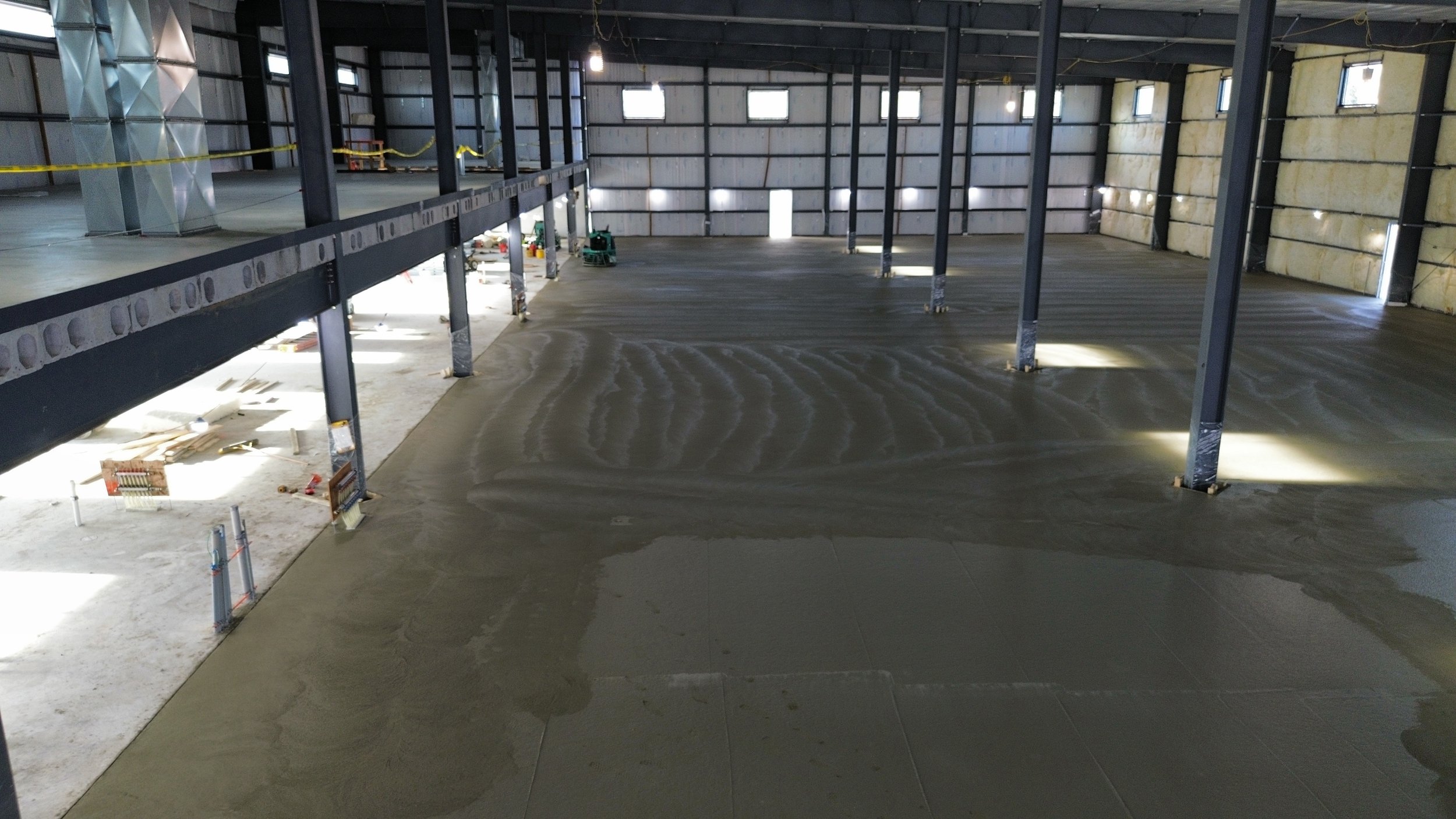
One of the first considerations is determining the loads the slab must support. Common warehouse loads include:
Static Loads
These remain in place for extended periods:
Storage racks
Shelving systems
Equipment foundations
Dynamic Loads
These move across the slab:
Forklifts
Pallet jacks
Delivery vehicles
Automated guided vehicles (AGVs)
Proper engineering ensures the slab can handle both types of loads without excessive cracking or deflection.
Soil Conditions and Subgrade Preparation
Even the strongest slab can fail if the ground beneath it is not properly prepared. Before construction begins, contractors often conduct geotechnical testing to evaluate:
Soil bearing capacity
Drainage characteristics
Moisture conditions
Compaction requirements
The Portland Cement Association recommends proper subgrade preparation as one of the most important factors affecting slab performance. Additional resources can be found on the Portland Cement Association website.
Slab Thickness
Warehouse slab thickness varies based on operational demands. Typical ranges include:
Facility TypeTypical ThicknessLight Commercial4–5 inchesStandard Warehouse6 inchesHeavy Industrial Warehouse7–8 inchesHigh-Rack Storage Facilities8+ inches
Thicker slabs generally provide greater load capacity and resistance to cracking.
Types of Reinforcement Used in Warehouse Slabs
Different reinforcement methods offer varying levels of performance.
Rebar Reinforcement
Steel reinforcing bars are the most common reinforcement option.
Benefits include:
Increased tensile strength
Improved crack control
Better load distribution
Long-term durability
Rebar is often used in high-load warehouse environments.
Welded Wire Mesh
Wire mesh helps distribute stresses throughout the slab and minimize shrinkage cracking. Benefits include:
Cost-effective reinforcement
Faster installation
Improved crack resistance
Fiber Reinforcement
Synthetic or steel fibers are mixed directly into the concrete. Advantages include:
Reduced shrinkage cracking
Improved impact resistance
Enhanced durability
Many industrial projects use fiber reinforcement alongside traditional steel reinforcement.
Concrete Mix Design for Warehouses
Not all concrete mixes are created equal. Warehouse floors often require higher-performance concrete capable of handling constant use and heavy loads.
Typical Warehouse Concrete Specifications
4,000–6,000 PSI compressive strength
Low water-cement ratio
Air entrainment when needed
Specialized admixtures for durability
The National Ready Mixed Concrete Association offers extensive guidance on selecting appropriate concrete mixes for industrial applications. Visit the National Ready Mixed Concrete Association for more information.
Warehouse Concrete Floor Flatness
Floor flatness is especially important in modern warehouse environments. Uneven surfaces can create problems for:
Forklifts
Automated warehouse systems
High-bay storage operations
Contractors often use laser-guided equipment to achieve precise floor elevations and meet floor flatness specifications. Flat floors improve:
Safety
Equipment efficiency
Storage capacity
Long-term performance
The Installation Process
A successful warehouse slab requires careful planning and execution.
Step 1: Site Preparation
This includes:
Excavation
Grading
Soil compaction
Aggregate base installation
Step 2: Reinforcement Placement
Rebar, wire mesh, or fibers are installed in accordance with engineering specifications. Proper reinforcement placement is critical for slab performance.
Step 3: Concrete Placement
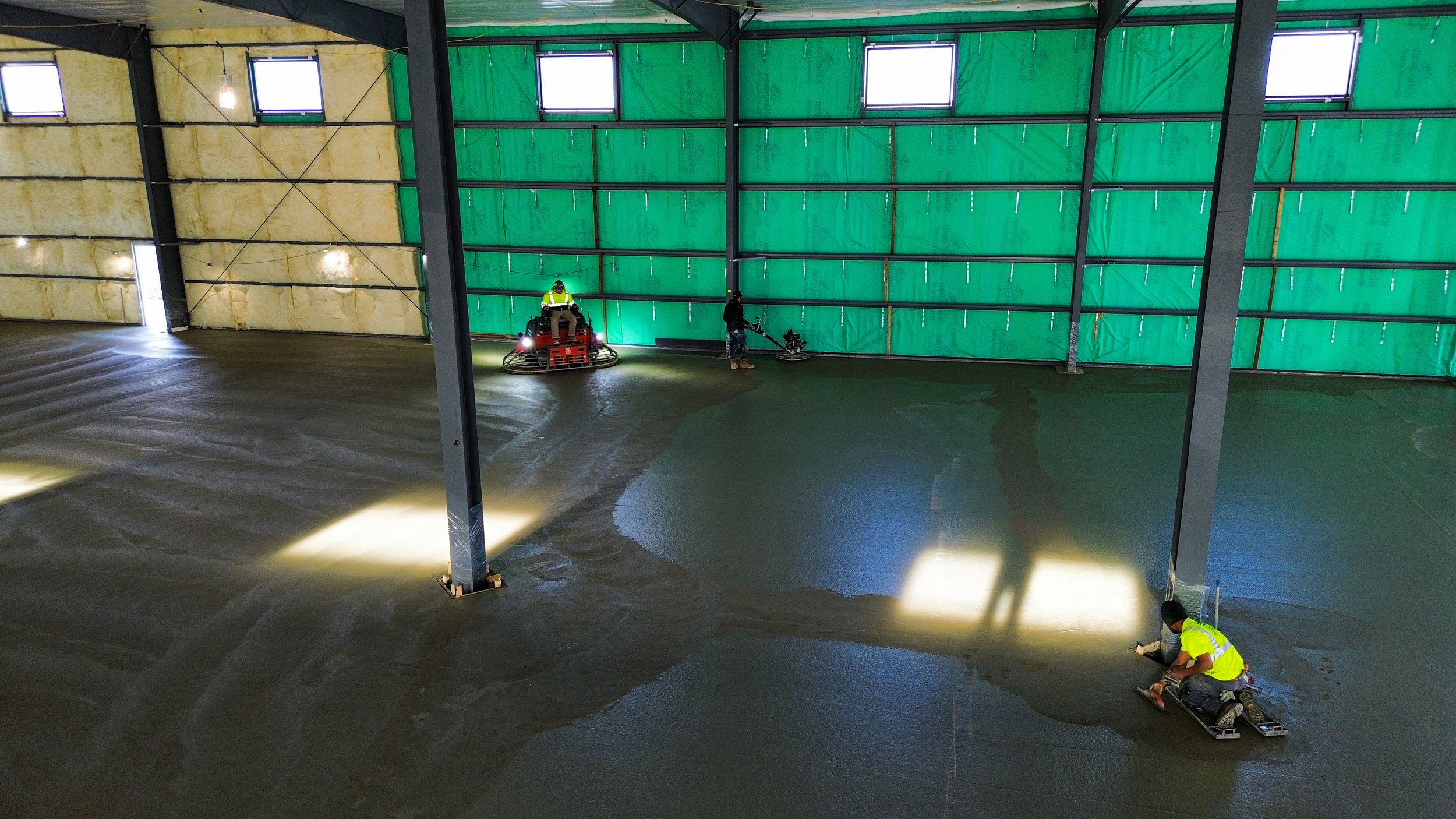
Large warehouse slabs are often poured in sections using specialized equipment. During placement, crews focus on:
Consistent thickness
Proper consolidation
Surface uniformity
Step 4: Finishing
The slab is finished to meet project requirements. Common warehouse finishes include:
Smooth trowel finish
Hardened surface treatments
Polished concrete systems
Step 5: Curing
Curing is essential for strength development and durability. Proper curing:
Reduces cracking
Improves abrasion resistance
Extends slab lifespan
According to Concrete Construction Magazine, improper curing remains one of the most common causes of concrete floor failures. Learn more at Concrete Construction Magazine.
How Much Do Reinforced Concrete Slabs Cost?
Warehouse concrete slab costs depend on several factors.
Factors Affecting Cost
Slab Thickness: Thicker slabs require more material and labor.
Reinforcement Type: Rebar, wire mesh, and fiber reinforcement each have different costs.
Site Conditions: Poor soils may require additional preparation.
Concrete Specifications: Higher-strength mixes generally increase costs.
Project Size: Larger projects often benefit from economies of scale.
Average Cost Range: Most reinforced warehouse concrete slabs fall within:
$8–$15 per square foot
Highly specialized industrial facilities may exceed this range depending on load requirements and complexity. While reinforced slabs may have higher upfront costs than standard concrete, the long-term savings often outweigh the initial investment.
What Is a Reinforced Concrete Slab? Benefits of Reinforced Concrete Slabs for Warehouses
Superior Durability: Reinforced slabs withstand years of heavy traffic and industrial use.
Reduced Cracking: Steel reinforcement helps control shrinkage and structural cracking.
Improved Load Capacity: Reinforced slabs can support heavy equipment, racking systems, and inventory loads.
Lower Maintenance Costs: Stronger slabs require fewer repairs over time.
Longer Service Life: Many reinforced warehouse floors provide decades of reliable performance when properly maintained.
Better Operational Efficiency: Flat, durable floors improve:
Forklift operations
Warehouse automation
Employee safety
Inventory management
Why Reinforced Concrete Slabs Are a Smart Investment
Warehouse construction is a significant investment, and the concrete slab is one of the most important components of the entire facility. A well-designed reinforced concrete slab provides:
Structural reliability
Operational efficiency
Long-term durability
Reduced lifecycle costs
Investing in quality concrete construction upfront can help prevent costly disruptions and repairs in the future.
Build Your Warehouse on a Strong Foundation
At Evenson Concrete Systems (ECS), we understand that every successful warehouse starts with a strong foundation. Our experienced team specializes in reinforced concrete slabs designed to meet the demands of industrial facilities, distribution centers, manufacturing plants, and commercial developments.
From planning and engineering to placement and finishing, ECS delivers durable, high-performance concrete solutions built to support your operations for years to come. Contact Evenson Concrete Systems today to discuss your warehouse project and learn how our team can help you build a reinforced concrete slab designed for strength, durability, and long-term success.