
The Ultimate Guide to Commercial Concrete Slabs for Industrial Builds

When it comes to industrial construction, everything starts from the ground up—literally. A well-designed commercial concrete slab is more than just a surface; it’s the structural foundation that supports heavy equipment, withstands constant traffic, and ensures long-term performance. Whether you’re building a warehouse, distribution center, manufacturing facility, or cold storage space, understanding the ins and outs of commercial concrete slabs is critical to protecting your investment.
In this ultimate guide, we’ll break down everything you need to know. From slab types and thickness requirements to costs, installation timelines, and best practices.
Inside the blog:
What Is a Commercial Concrete Slab?
Types of Commercial Concrete Slabs
Key Design Considerations for Industrial Slabs
Concrete Mix Design for Industrial Applications
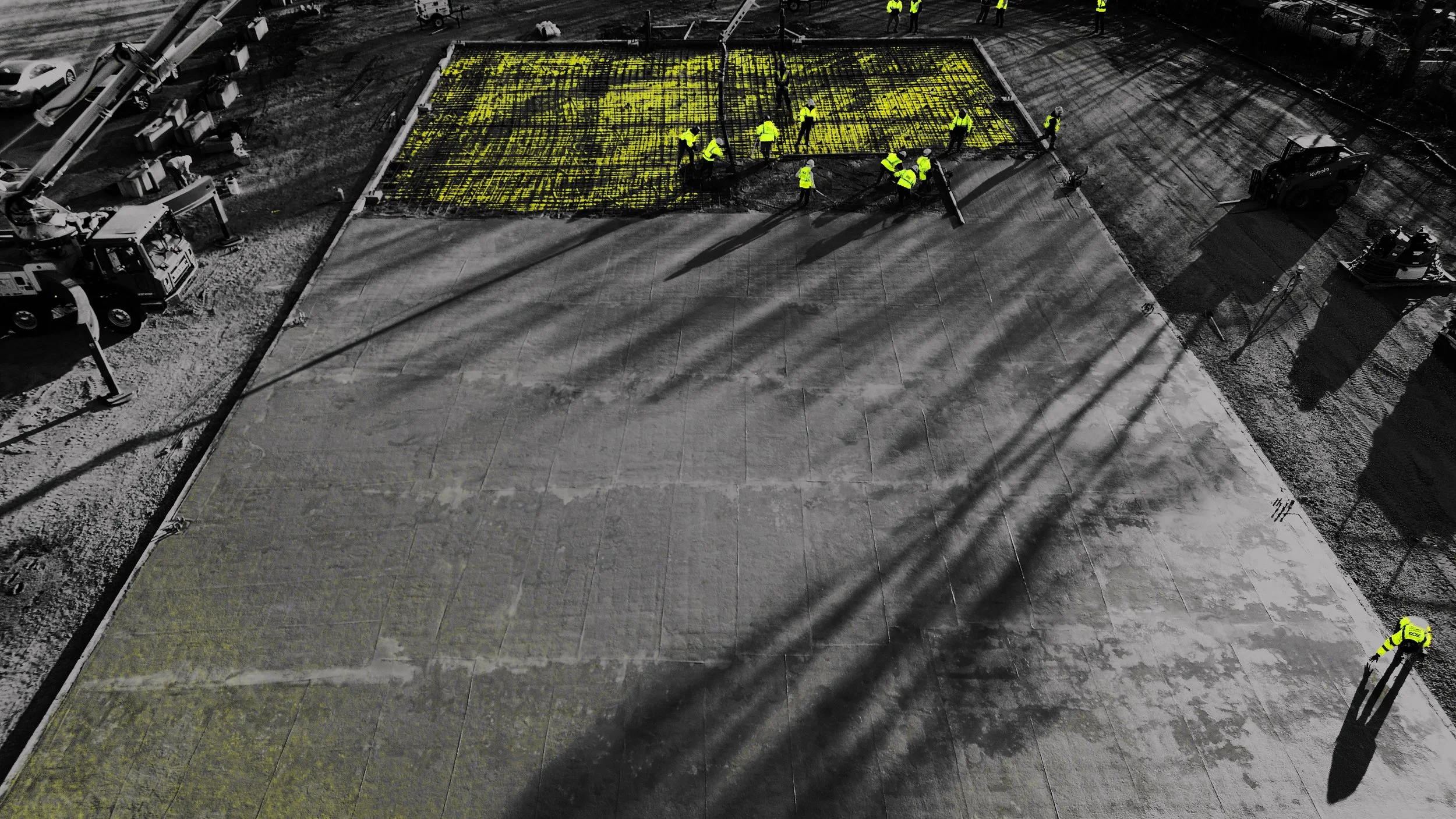
Installation Process: From Prep to Pour
Cost of Commercial Concrete Slabs
Final Thoughts: Building Smarter from the Ground Up
What Is a Commercial Concrete Slab?
A commercial concrete slab is a flat, horizontal surface made of poured concrete that serves as the base for industrial and commercial structures. These slabs are engineered to handle heavier loads and more demanding conditions than residential slabs.
Industrial slabs must account for:
Heavy machinery and equipment loads
Forklift and vehicle traffic
Environmental conditions (temperature swings, moisture, chemicals)
Long-term durability and minimal maintenance
Types of Commercial Concrete Slabs
Choosing the right slab type depends on your facility’s use, soil conditions, and load requirements.
1. Slab-on-Grade
The most common option for industrial builds, slab-on-grade, is poured directly onto a prepared subbase.
Best for:
Warehouses
Distribution centers
Manufacturing facilities
Benefits:
Cost-effective
Fast installation
Durable under heavy loads
2. Reinforced Concrete Slabs
These slabs include steel reinforcement (rebar or wire mesh) to increase strength and prevent cracking.
Best for:
High-load industrial facilities
Areas with heavy equipment or storage systems
Benefits:
Increased structural integrity
Better crack control
Longer lifespan
3. Post-Tensioned Slabs
Post-tensioning uses high-strength steel cables tensioned after the concrete cures, improving performance.
Best for:
Large-span facilities
Poor soil conditions
Benefits:
Reduced cracking
Thinner slab design
Improved load distribution
4. Elevated Slabs
Used when a structure requires multiple levels or is built above grade.
Best for:
Parking structures
Multi-level industrial facilities
Key Design Considerations for Industrial Slabs
A successful concrete slab starts with proper design. Skipping this step can lead to costly repairs down the road.
Load Requirements
Understanding load capacity is essential. Industrial slabs must support:
Static loads (equipment, racking systems)
Dynamic loads (forklifts, vehicles)
Subgrade Preparation
A stable subgrade is critical. Poor soil conditions can lead to:
Settlement
Cracking
Uneven surfaces
Proper preparation includes:
Compaction
Moisture control
Use of granular base materials
Thickness Requirements
Typical industrial slab thickness ranges from 5 to 8 inches, but high-load applications may require 8 inches or more.
Joint Placement
Control joints help manage cracking by allowing the concrete to expand and contract.
Best practices include:
Strategic spacing
Proper depth cutting
Early installation timing
Concrete Mix Design for Industrial Applications
Not all concrete is created equal. The right mix design ensures performance under demanding conditions.
Key Components:
Compressive strength: Typically 4,000–6,000 PSI for industrial use
Water-cement ratio: Lower ratios increase durability
Admixtures: Enhance performance (air entrainment, accelerators, retarders)
In specialized environments like cold storage or chemical facilities, additional considerations, such as thermal resistance and chemical durability, are essential.
Installation Process: From Prep to Pour
A properly installed slab ensures longevity and performance.
Step 1: Site Preparation
Clearing and grading
Subgrade compaction
Installing vapor barriers if needed
Step 2: Formwork and Reinforcement
Setting forms to define slab dimensions
Placing rebar or mesh
Step 3: Concrete Pouring
Even distribution of concrete
Use of pumps or conveyors for large areas
Step 4: Finishing
Smoothing and leveling
Surface treatments depending on use
Step 5: Curing
Curing is one of the most critical steps. Proper curing:
Prevents cracking
Improves strength
Extends lifespan
According to the American Concrete Institute, maintaining proper moisture and temperature during curing is essential for achieving optimal concrete performance.
Cost of Commercial Concrete Slabs
The cost of a commercial concrete slab varies based on several factors:
Average Cost Range
$6 to $12 per square foot (depending on complexity and specs)
Factors That Impact Cost:
Slab thickness
Reinforcement requirements
Site conditions
Labor and equipment
Finishes and coatings
Investing in quality upfront often reduces long-term maintenance and repair costs.
Common Challenges and How to Avoid Them
Cracking
Cause: Improper curing, poor joint placement
Solution: Follow best practices in curing and joint design
Moisture Issues
Cause: Lack of vapor barrier
Solution: Install proper moisture protection systems
Uneven Surfaces
Cause: Poor subgrade preparation
Solution: Ensure proper compaction and grading
Best Practices for Long-Term Performance
To maximize the lifespan of your commercial concrete slab:
Work with experienced contractors
Follow industry standards (like those from the Portland Cement Association)
Invest in proper design and engineering
Prioritize curing and finishing techniques
Schedule regular inspections and maintenance
Why Commercial Concrete Slabs Matter for Industrial Builds
In industrial construction, downtime is costly. A poorly designed or installed slab can lead to:
Operational disruptions
Equipment damage
Safety hazards
On the other hand, a high-quality concrete slab provides:
Structural stability
Long-term durability
Reduced maintenance costs
Improved operational efficiency

Final Thoughts: Building Smarter from the Ground Up
When it comes to industrial construction, your concrete slab is too important to leave to chance. From design and engineering to placement and finishing, every detail matters—and having the right team makes all the difference.
At Evenson Concrete Systems (ECS), we specialize in delivering high-performance commercial concrete slabs built to handle the demands of industrial environments. Our team understands the complexities of load requirements, site conditions, and long-term durability—so you can move forward with confidence.
Whether you're planning a warehouse, manufacturing facility, or large-scale development, ECS is ready to help you build smarter from the ground up.
Let’s get your project started. Contact Evenson Concrete Systems today to discuss your next commercial concrete slab project and get expert guidance tailored to your needs.