
5 Things That Affect How Long Concrete Takes to Cure
Understanding Concrete Cure Time for Stronger, Longer-Lasting Commercial Projects
When a concrete slab is poured, many people assume the project is complete once the surface is hard enough to walk on. In reality, that's only the beginning. Concrete continues to gain strength through a process called curing, and how well that process is managed can determine the long-term durability, performance, and lifespan of the finished structure.
At Evenson Concrete Systems (ECS), we understand that proper curing is just as important as proper placement. Whether we're constructing warehouse floors, school additions, commercial foundations, industrial facilities, or municipal infrastructure, ensuring concrete cures correctly helps protect our clients' investments for decades.
So, how long does concrete take to cure? While most concrete reaches about 70% of its design strength within seven days and approximately 100% of its specified design strength around 28 days, several factors can speed up or slow down that process.
Let's look at the five biggest factors that affect concrete cure time and why they matter.
Inside the blog:
What Is Concrete Curing?
How Long Does Concrete Really Take to Cure?
What Is a Reinforced Concrete Slab? Benefits of Reinforced Concrete Slabs for Warehouses
Why Proper Curing Matters
Build It Right from the Start
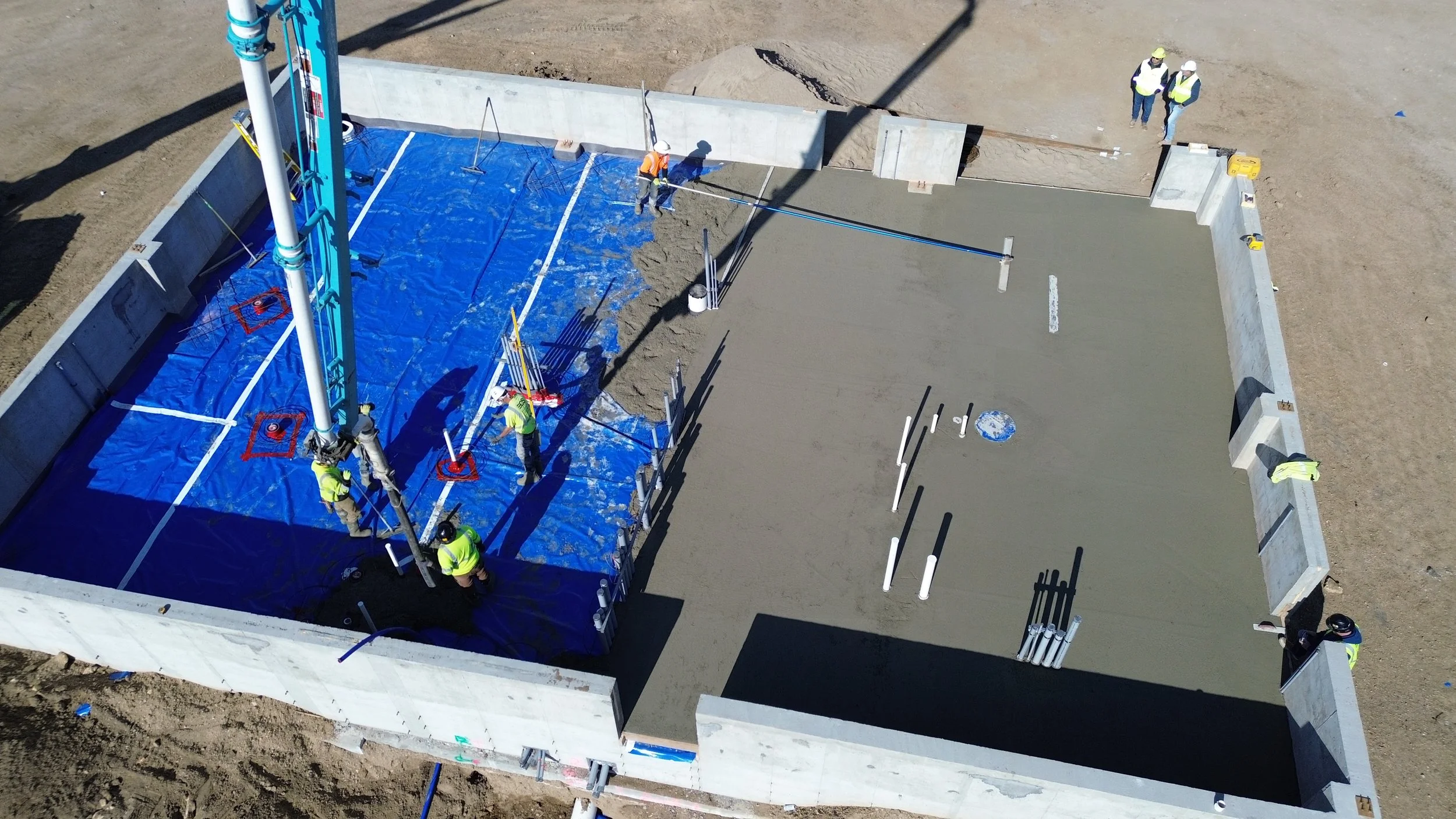
What Is Concrete Curing?
Before discussing the factors, it's important to understand what curing actually means. Concrete doesn't simply "dry." Instead, it undergoes a chemical reaction called hydration, in which cement reacts with water to form the hardened material we know as concrete.
As long as moisture and temperature remain favorable, hydration continues, allowing the concrete to gain strength over time.
According to the American Concrete Institute (ACI), proper curing is essential for achieving the intended strength, durability, watertightness, and resistance to wear of concrete structures.
Learn more about concrete standards from the American Concrete Institute.
1. Weather and Temperature
Perhaps the biggest factor affecting cure time is the weather. Minnesota weather alone can create vastly different curing conditions depending on the season.
Hot Weather
High temperatures cause water to evaporate more quickly from the concrete surface. If moisture leaves too fast:
Surface cracking increases
Strength development slows
Shrinkage becomes more likely
Surface durability decreases
Contractors often use curing compounds, evaporation retarders, or wet curing techniques during summer pours to maintain adequate moisture.
Cold Weather
Cold temperatures slow hydration significantly. When temperatures drop below approximately 50°F, hydration slows dramatically. If fresh concrete freezes before gaining sufficient strength, permanent damage may occur.
The Portland Cement Association offers excellent guidance on cold-weather concrete placement:
2. Water-to-Cement Ratio
The amount of water in a concrete mix directly affects curing time. While adding more water may seem like an easy way to improve workability, too much water creates problems.
Higher water content can:
Delay strength gain
Increase shrinkage
Reduce durability
Increase permeability
Create weaker surfaces
Conversely, too little water can make finishing difficult and may prevent complete hydration. Finding the proper water-to-cement ratio is critical.
Experienced commercial concrete contractors carefully design concrete mixes based on:
Project type
Structural requirements
Weather conditions
Expected traffic loads
Finish requirements
A proper mix design allows concrete to cure efficiently while achieving maximum performance.
3. Moisture Retention During Curing
Hydration requires water. If concrete loses moisture too quickly, hydration slows or even stops. That's why moisture retention is one of the most important aspects of curing.
Common curing methods include:
Water curing
Keeping the surface continuously moist using:
Sprinklers
Wet burlap
Ponding
Soaker hoses
Curing compounds
Liquid membrane-forming compounds are sprayed onto freshly finished concrete. These compounds slow evaporation while allowing hydration to continue.
Plastic sheeting
Plastic covers trap moisture and reduce evaporation.
Curing blankets
Insulated blankets help retain both heat and moisture during colder weather. Proper moisture retention allows cement particles to continue bonding together, producing stronger, denser concrete. The National Ready Mixed Concrete Association (NRMCA) explains why moisture is essential for long-term durability:
4. Concrete Mix Design
Not all concrete cures at the same rate. Every commercial project has unique requirements, and mix designs are adjusted accordingly.
Factors affecting cure time include:
Cement type
Different cement formulations hydrate at different speeds. Some high-early-strength mixes gain strength rapidly, while others cure more slowly for specialized applications.
Supplementary cementitious materials
Materials such as:
Fly ash
Slag cement
Silica fume
can improve long-term durability but may slightly extend curing time.
Chemical admixtures
Modern concrete often includes admixtures that can:
Accelerate curing
Slow curing
Improve workability
Increase durability
Reduce water demand
Selecting the right combination depends entirely on project goals. For example, warehouse floors often prioritize long-term durability, while fast-track commercial projects may require accelerated strength gain.
5. Slab Thickness and Project Conditions
Thicker concrete doesn't necessarily cure more slowly—but project conditions often complicate curing. Large industrial slabs retain heat differently from sidewalks or residential patios.
Examples include:
Warehouse floors
Manufacturing facilities
Foundations
Bridge decks
Parking structures
These larger pours require careful planning to ensure consistent curing throughout the slab.
Additional factors include:
Wind exposure
Direct sunlight
Humidity
Air movement
Subgrade conditions
Each variable influences evaporation and hydration rates. Experienced contractors monitor these conditions closely throughout placement and curing.

How Long Does Concrete Really Take to Cure?
While every project is unique, here's a general timeline.
24–48 Hours
Concrete becomes hard enough for light foot traffic.
Hydration has only begun.
7 Days
Concrete reaches approximately 70% of its design strength.
Many structural elements can begin carrying moderate loads.
28 Days
Most commercial concrete reaches its specified design strength.
This is the benchmark engineers use when evaluating concrete performance.
Beyond 28 Days
Hydration continues for months—and sometimes years.
Concrete gradually becomes stronger over time if properly cured.
What Is a Reinforced Concrete Slab? Benefits of Reinforced Concrete Slabs for Warehouses
Superior Durability: Reinforced slabs withstand years of heavy traffic and industrial use.
Reduced Cracking: Steel reinforcement helps control shrinkage and structural cracking.
Improved Load Capacity: Reinforced slabs can support heavy equipment, racking systems, and inventory loads.
Lower Maintenance Costs: Stronger slabs require fewer repairs over time.
Longer Service Life: Many reinforced warehouse floors provide decades of reliable performance when properly maintained.
Better Operational Efficiency: Flat, durable floors improve:
Forklift operations
Warehouse automation
Employee safety
Inventory management
Why Proper Curing Matters
Poor curing can create long-term problems, including:
Surface dusting
Scaling
Shrinkage cracks
Joint deterioration
Reduced abrasion resistance
Lower compressive strength
Higher maintenance costs
For commercial buildings, these issues often result in expensive repairs and operational disruptions.
Proper curing, however, helps create:
Stronger slabs
Longer service life
Better resistance to chemicals
Improved freeze-thaw durability
Lower lifecycle costs
That's why curing is one of the most valuable investments during construction.
Why Commercial Projects Require Experienced Concrete Contractors
Commercial concrete projects involve much more than simply pouring concrete.
Successful curing requires understanding:
Weather conditions
Mix designs
Moisture control
Construction schedules
Industry standards
Jobsite logistics
At Evenson Concrete Systems, every project is planned with long-term performance in mind.
Our experienced team evaluates environmental conditions before every pour and implements curing methods designed to maximize durability, strength, and finish quality.
Whether we're constructing educational facilities, manufacturing plants, municipal infrastructure, retail developments, or industrial warehouses, our commitment to quality extends well beyond placement day.
Why Minnesota Weather Makes Curing Even More Important
Minnesota presents some of the country's most challenging curing conditions.
Summer heat can rapidly dry fresh concrete.
Winter temperatures can dramatically slow hydration.
Spring and fall often bring fluctuating temperatures that require constant monitoring.
Because of these changing conditions, local expertise matters.
Understanding when to pour, how to protect fresh concrete, and which curing methods work best throughout the year helps ensure long-lasting results.
Build It Right from the Start
Concrete is one of the most durable construction materials available, but only if it's given the opportunity to reach its full strength. Weather, moisture, mix design, slab conditions, and proper curing practices all play a role in determining how long concrete takes to cure.
By understanding these five factors, property owners can make informed decisions and protect their investment for decades.
At Evenson Concrete Systems, we believe quality doesn't end when the concrete is placed. Every project is built with craftsmanship, integrity, and careful attention to every stage of the process—including curing. Whether you're planning a warehouse, school, retail development, industrial facility, or municipal project, our team has the expertise to deliver concrete solutions built to last.
Contact Evenson Concrete Systems Today
Ready to start your next commercial concrete project? Evenson Concrete Systems provides expert concrete construction services throughout Southern Minnesota. From planning and placement to proper curing and finishing, we're committed to delivering exceptional results that stand the test of time.
Learn more about our services or contact our team today to discuss your next project.